
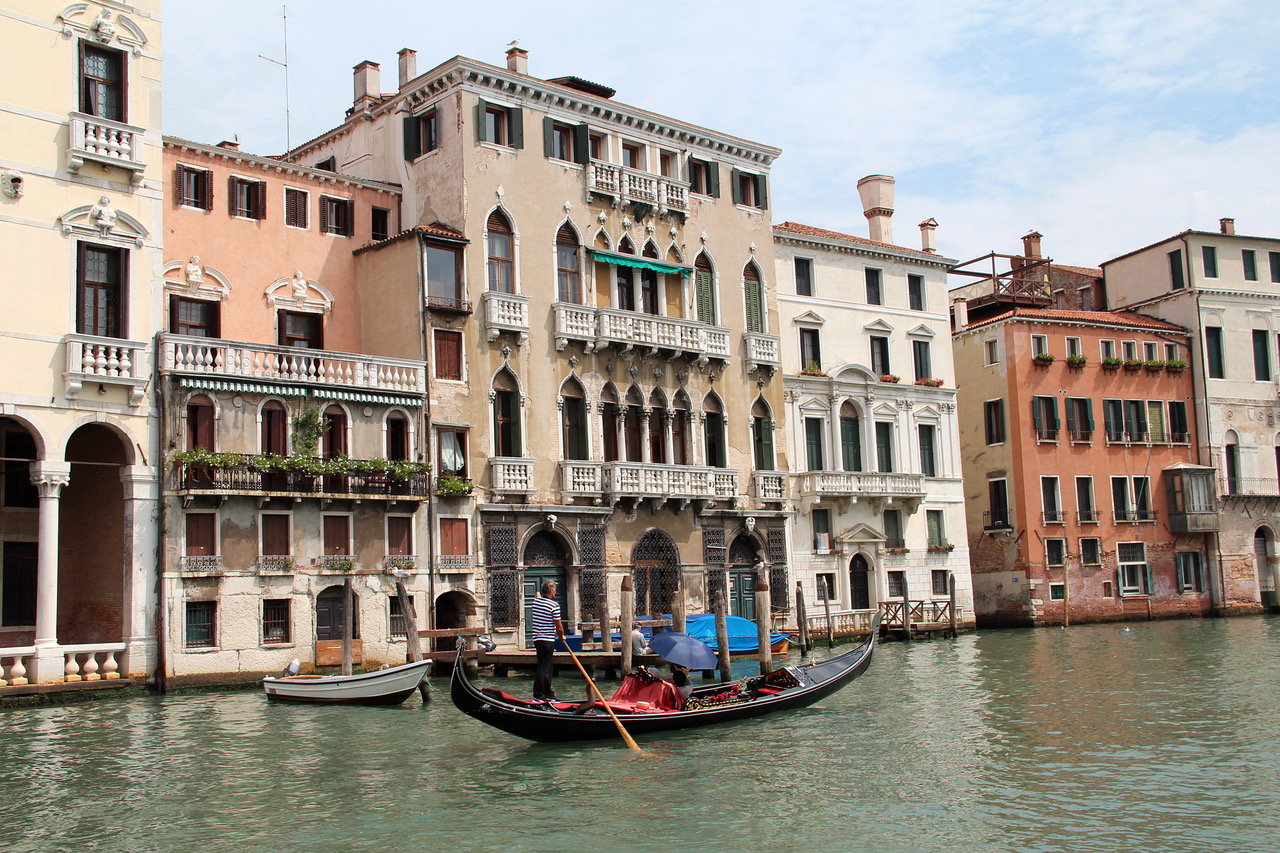
The 61st Venice Art Biennale opened in 2026 at a moment of profound institutional crisis. Before the public entered the Giardini and the Arsenale, the edition had already been marked by resignations, boycotts, closed pavilions, disputes around participating artists, absent countries, threatened funding, protests and the biggest strike in the Biennale’s 131- year history. What has long presented itself as a global stage for contemporary art increasingly exposes the contradictions of the political architecture on which it was built.
This moment invites us to revisit not only how Roma artists have been represented at the Venice Biennale, but the broader question of who is granted visibility within an international art system still largely organised around nation states.
Roma artists, curators and cultural organisations have repeatedly challenged this structure. Major exhibitions of Roma contemporary art organised in connection with the Venice Biennale in 2007, 2011, 2019 and 2022 constituted some of the most significant collective efforts to position Roma art on an international stage at the centre of contemporary cultural diplomacy.
A significant breakthrough came in 2022, when Małgorzata Mirga Tas became the first Roma artist to represent a country in a national pavilion at the Venice Biennale, representing Poland with Re-enchanting the World. In the same edition, another important institutional intervention took place when the Nordic Pavilion was transformed into the Sámi Pavilion. The project foregrounded Sámi sovereignty and challenged the assumption that the cultural representation of a territory must necessarily coincide with the political borders of the nation state.
These developments brought renewed relevance to a question Roma artists and cultural organisations had been raising for years. Several Roma delegations have engaged directly with the management of the Venice Biennale, most recently in 2021, questioning how Roma artistic production could be recognised within an institutional system structured primarily through national representation. By 2026, however, this question can no longer be considered a Roma question alone.
The political legitimacy of the national pavilion model itself is increasingly contested. Writingabout the current Biennale, artist and theorist Daniel G. Andújar argues that the 1 model of national representation inherited from the nineteenth century has reached its limits. In his analysis, the present crisis exposes the contradictions of an institutional architecture in which nation states continue to finance and represent culture while simultaneously engaging in war, censorship, political propaganda and profound conflicts over whose voices can legitimately enter the international cultural sphere. The question facing us is therefore larger than how Roma artists might gain access to the existing structure. It is also whether communities whose histories, cultures and identities exceed national borders can help imagine different forms of representation.
Roma have contributed to the cultural history of Europe for more than six centuries while remaining a transnational people whose cultural presence cannot be contained within the framework of any single nation state. We therefore consider this an important moment to reopen the conversation about a sustained Roma presence during the Venice Biennale. Not simply as another temporary exhibition, nor necessarily as another pavilion reproducing the existing national model, but as a collective platform through which Roma artists, cultural institutions and communities can participate in redefining who is visible, who is represented and who has the power to shape global cultural narratives.
From RʳOMA LEPANTO towards 2028 Venice Biennale.
This conversation was renewed during RʳOMA LEPANTO, organised by Foundation Kai Dikhas with the support of ERIAC at Palazzo Bembo during the 60th Venice Biennale in 2024. A conference accompanying the exhibition brought together artists, cultural practitioners and organisations to discuss the history and future of Roma presence in Venice. It concluded with a collective call for a sustained Roma platform in the city, which has been given the provisional title Roma Project Space Venice contrasting the system of National Pavillons. This idea has been developed and is supported also by Romani Rose, a leading figure of the European movement of Sinti and Roma.
The meeting Towards a Roma Project Space Venice, taking place on 22 October 2026 at Palazzo Michiel del Brusá, continues this conversation. Rather than considering the question of Roma representation resolved, the meeting seeks to reopen it in light of the rapidly changing political and institutional context of the Venice Biennale. It will bring together Roma artists and organisations, international cultural institutions, partners and allies to discuss what a sustained Roma presence in Venice could become and what institutional, curatorial and political form it should take.
One proposal emerging from this process is the creation of an Alliance for a Roma Project Space Venice. The Alliance would build cooperation towards a new collective intervention during the 2028 Venice Biennale while developing a longer-term vision for a Roma platform in Venice.
At a moment when the inherited architecture of national cultural representation is increasingly being questioned, the initiative proposes that Roma presence in Venice should not simply seek accommodation within an obsolete logic of representation. It should contribute to the conversation about what might come after it.
VENUE
European Cultural Centre, Palazzo Michiel del Brusà
Strada Nuova – 4391 Campo Santi Apostoli
30121 Venedig, Italien
Online participation via Zoom:
Am Zoom-Meeting teilnehmen
Event: 22. October 2026 – from 2 p.m.