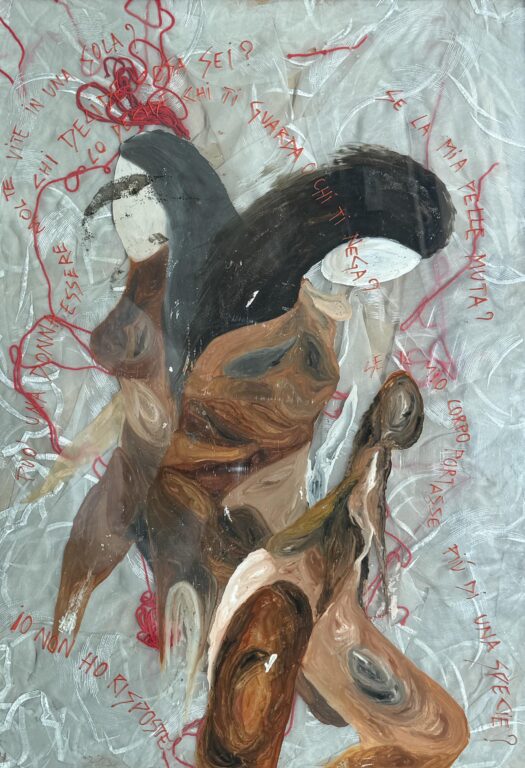
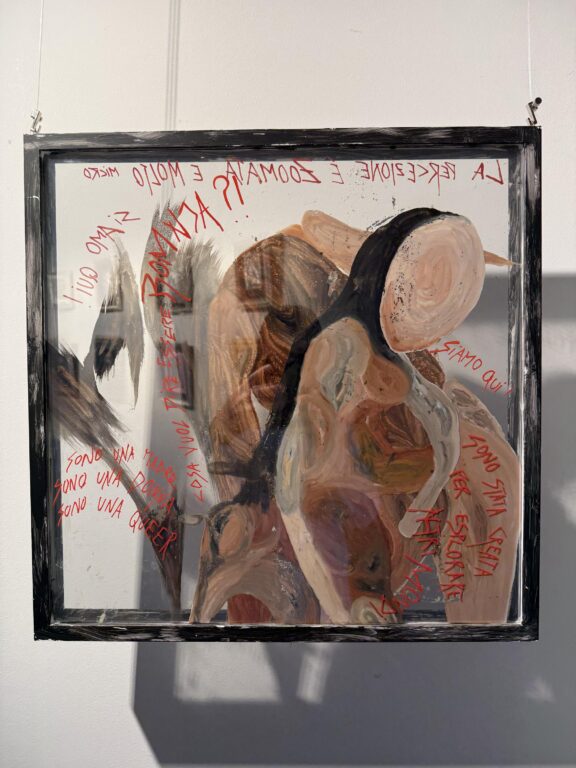
Metamorphosis of thoughts is a profound, staged transformation of the mind, shifting from rigid, old beliefs through discomfort and exploration into a new, integrated state of wisdom and self-awareness. Triggered by artistic challenges or conscious effort, this process mirrors biological change, allowing individuals to reshape their identities, perspectives, and mental landscapes to foster societal progress and inclusion, fight racism and antiziganism.
To mark the 15th anniversary of Kai Dikhas, this exhibition aims to provide a broader perspective on the foundation’s work and its context. Historical artworks enter into a dialogue with contemporary art, showcasing the forward-thinking approach of artists who believe in the potential for change and the ability to shape our social coexistence and our world.
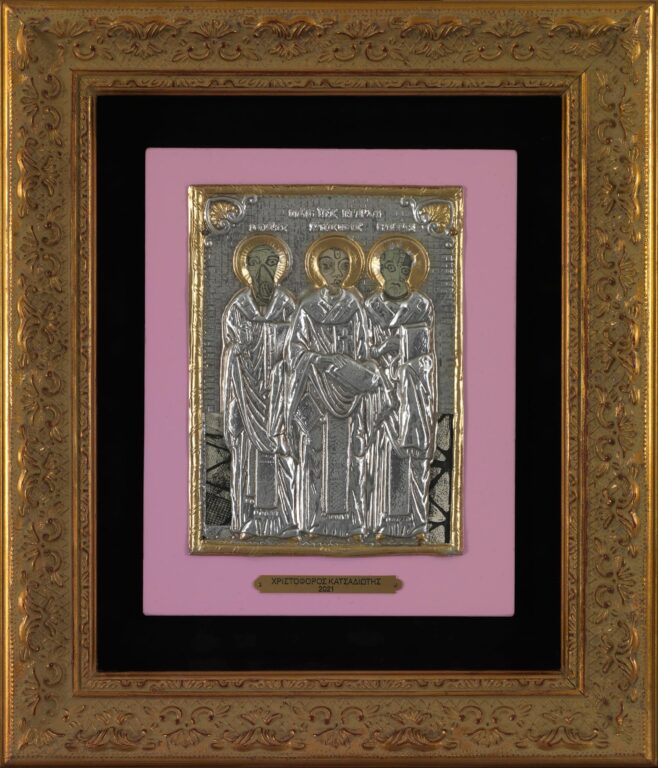
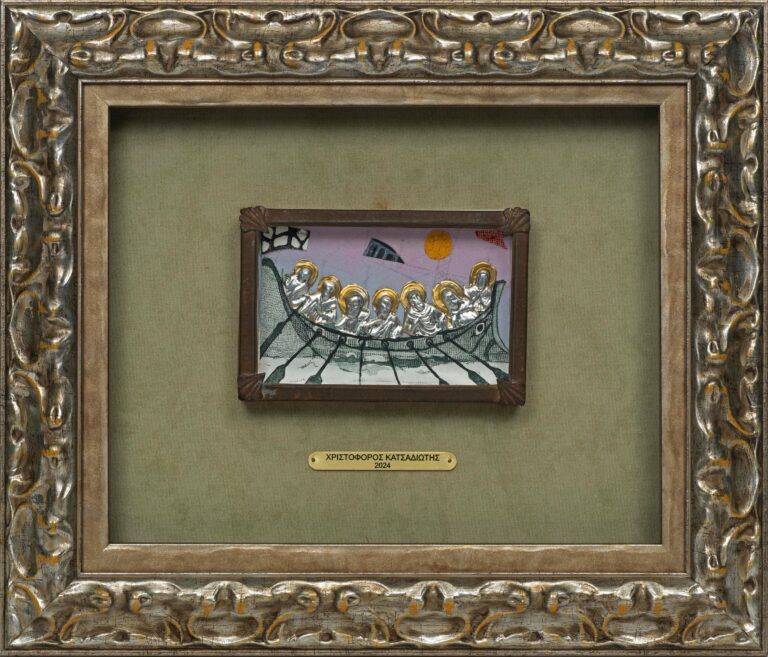
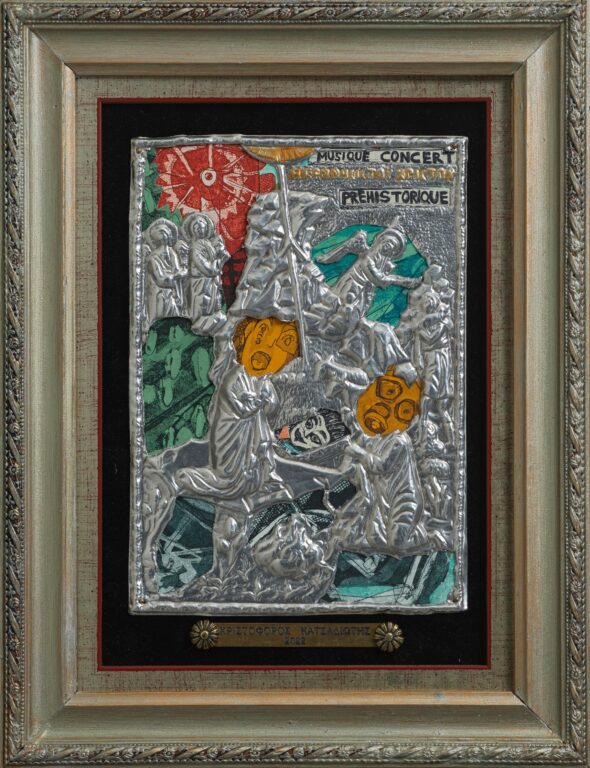
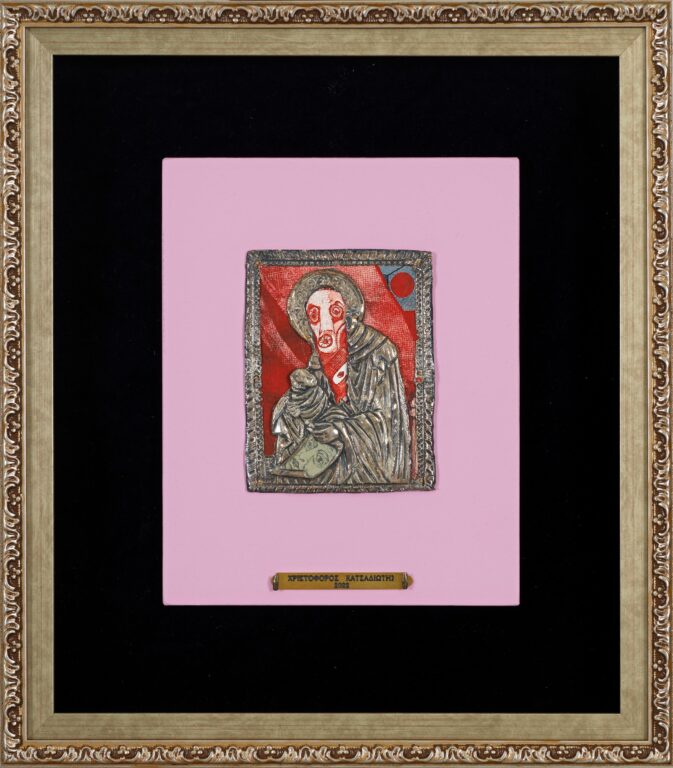
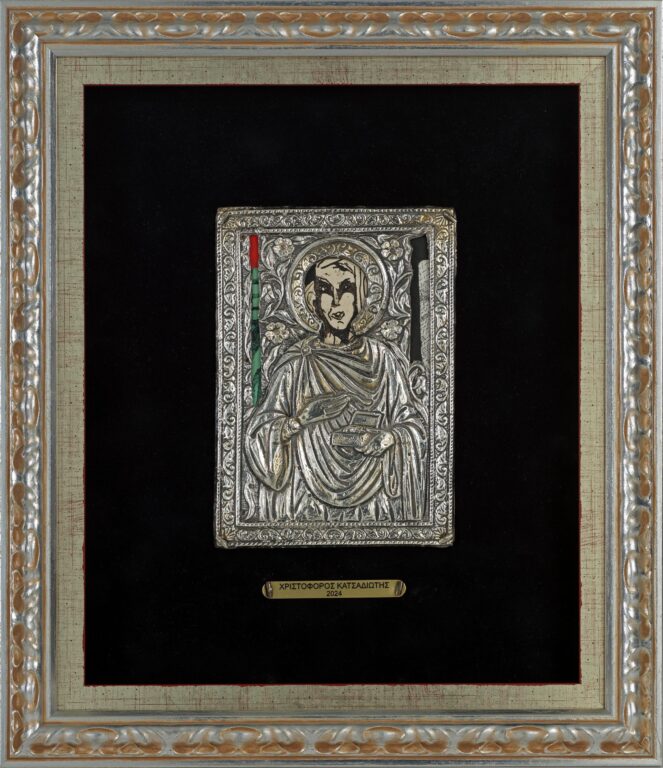
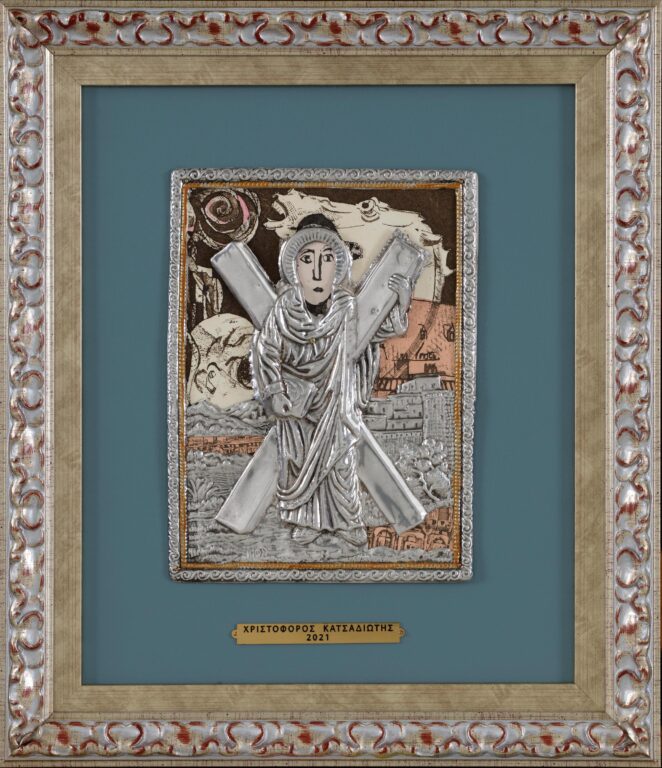
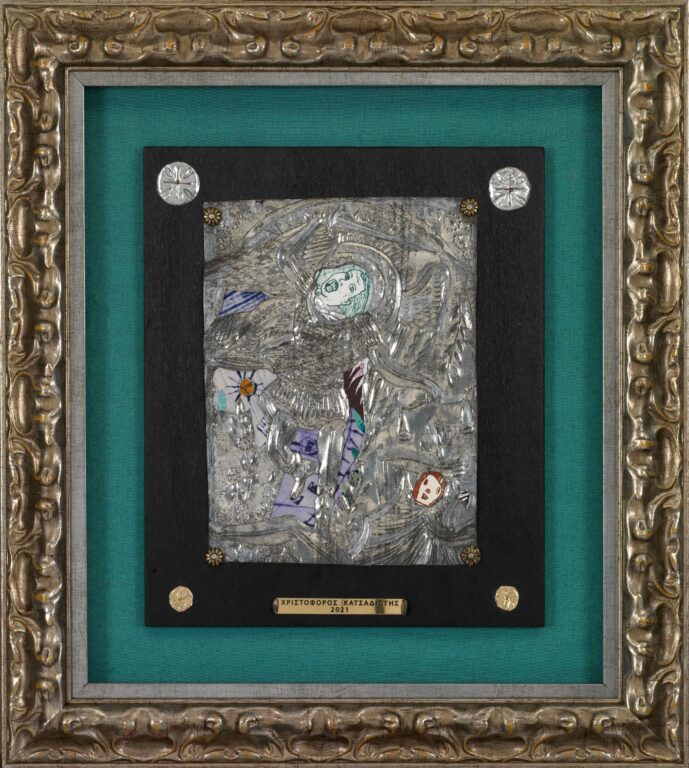
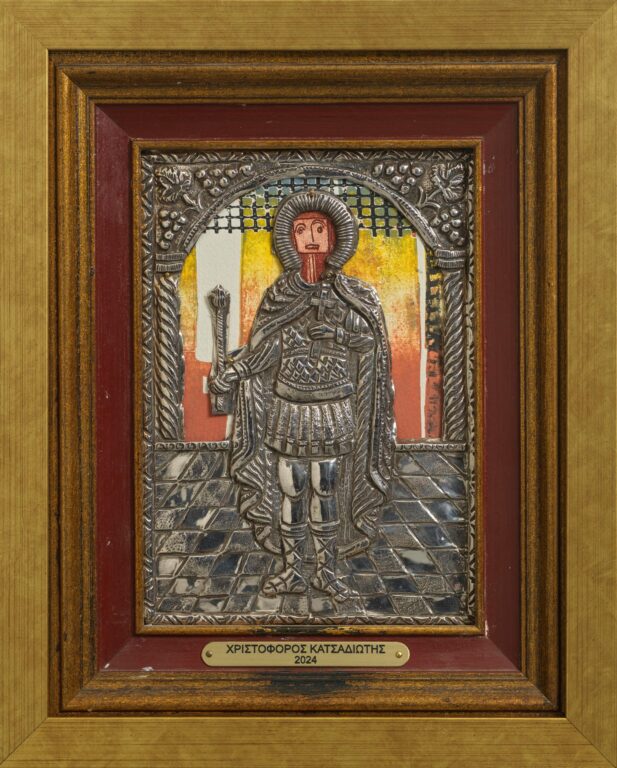
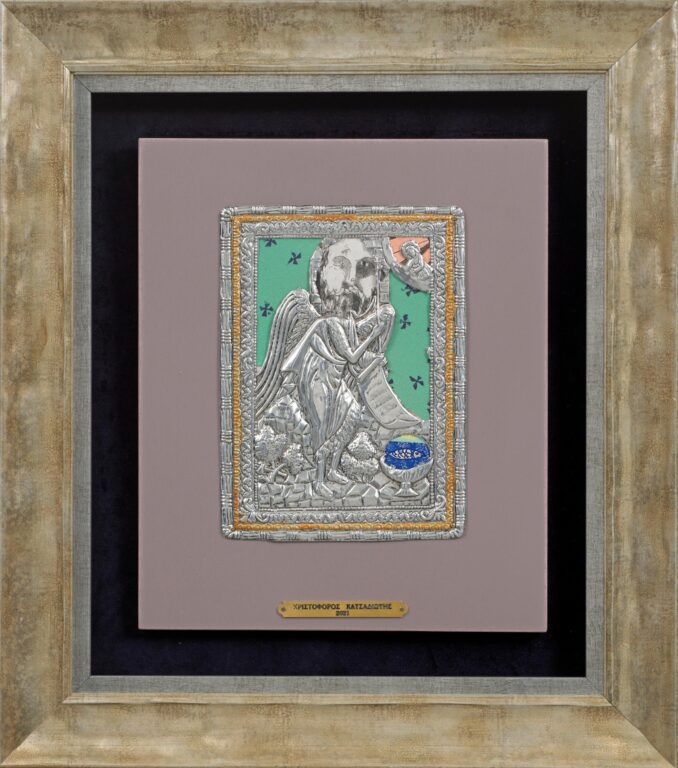
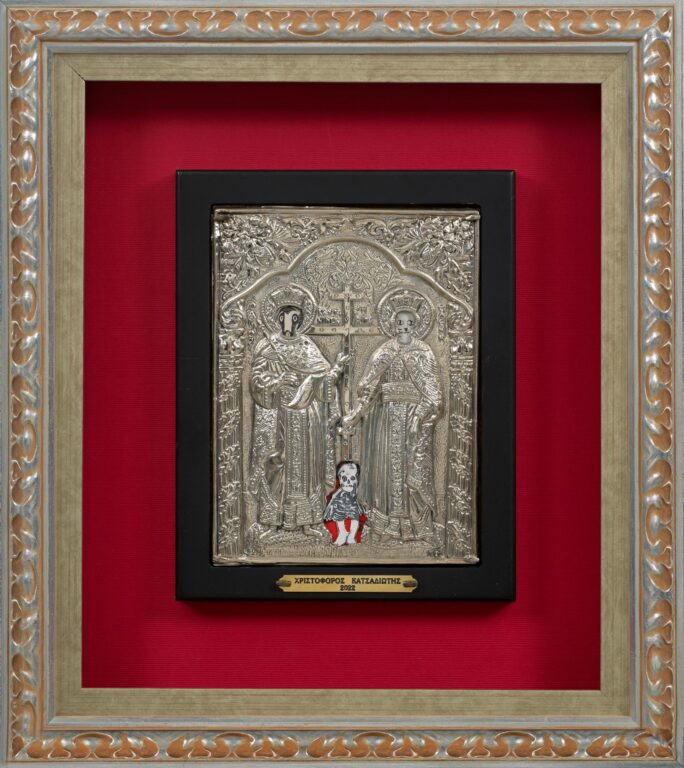
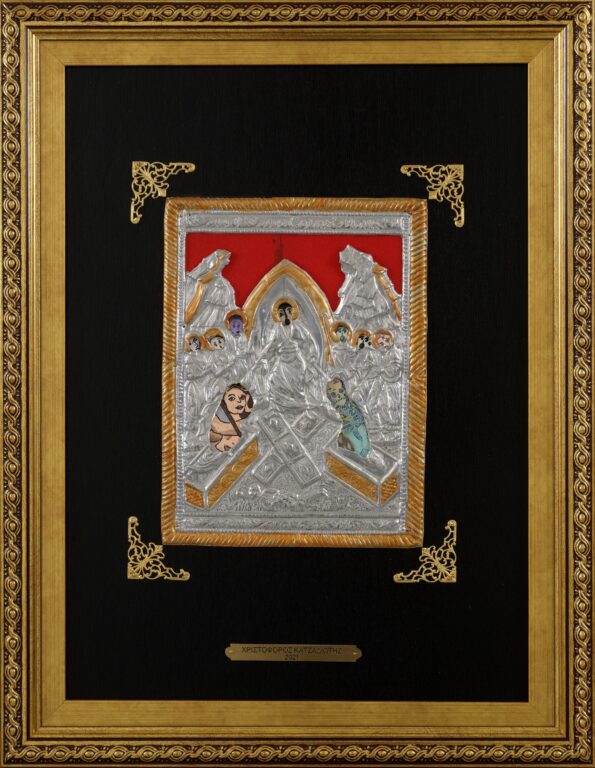
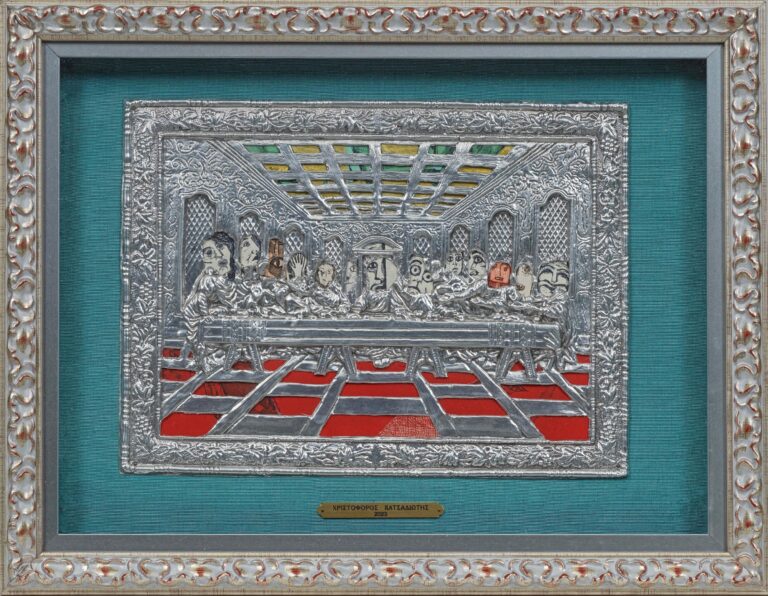
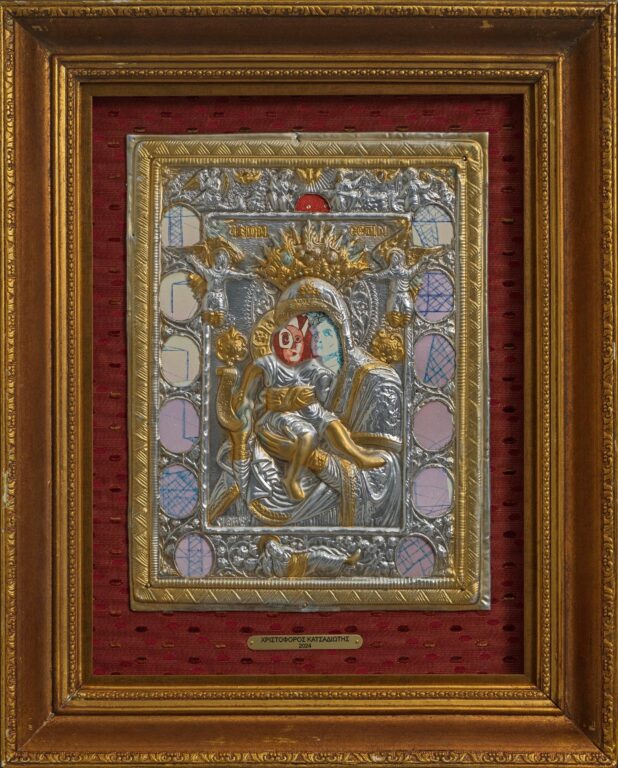
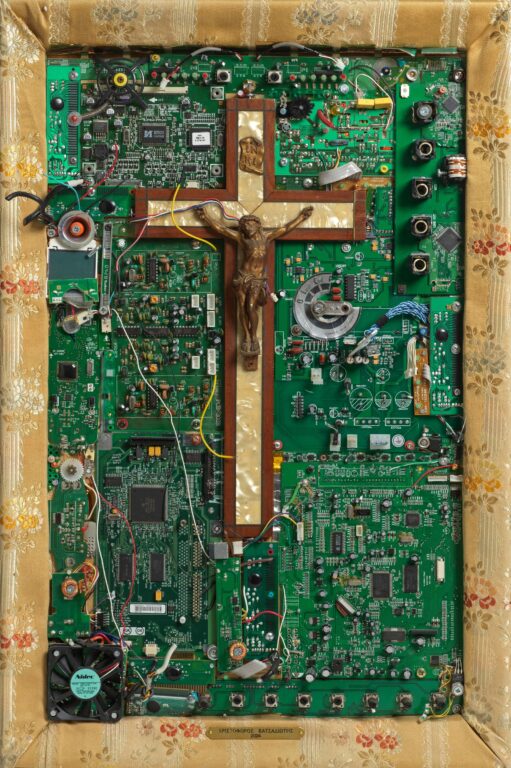
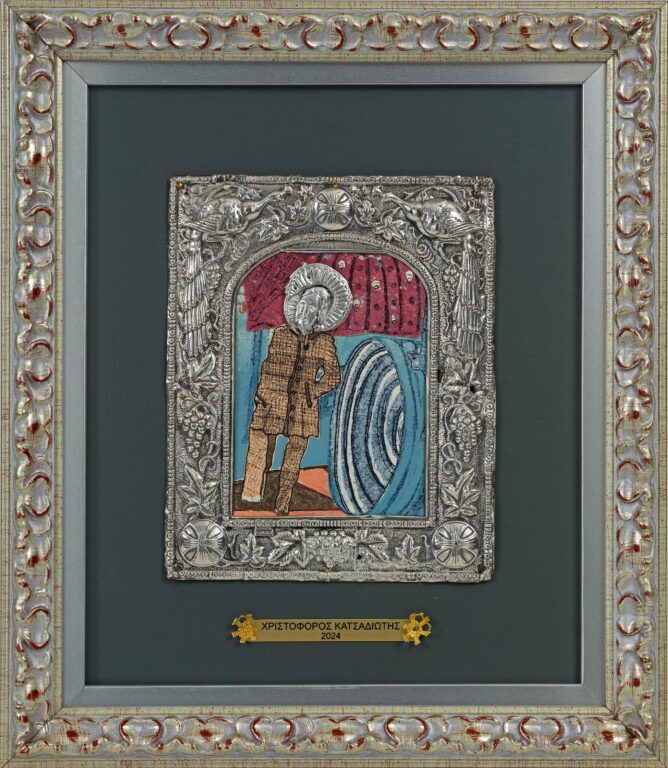
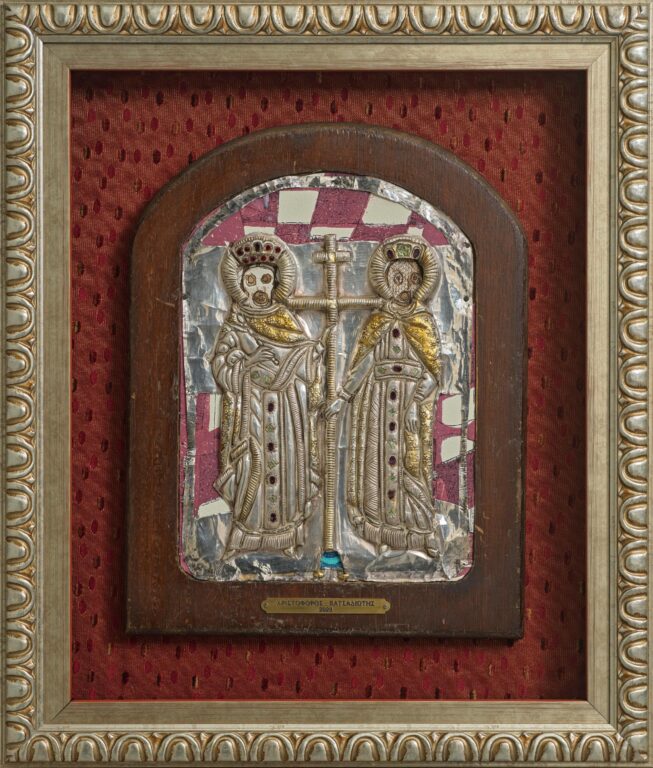
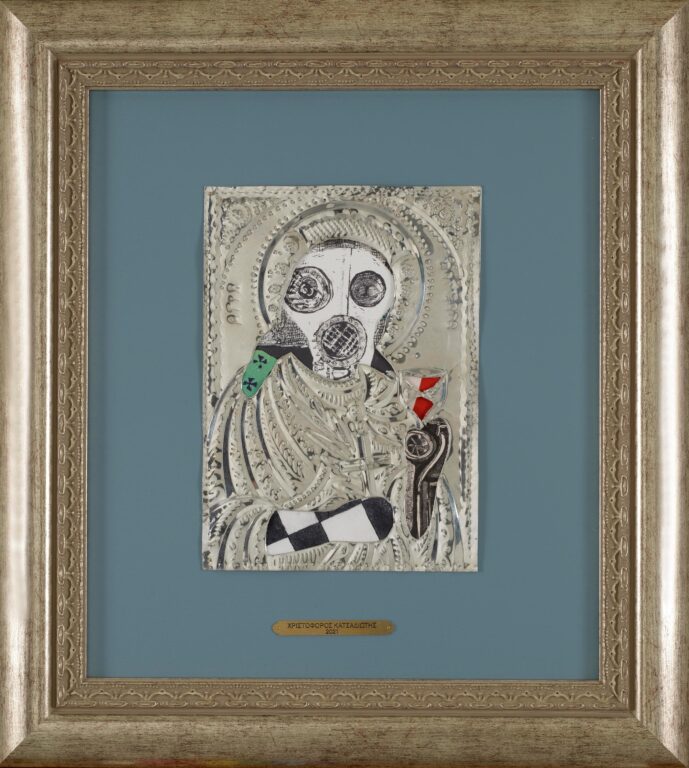
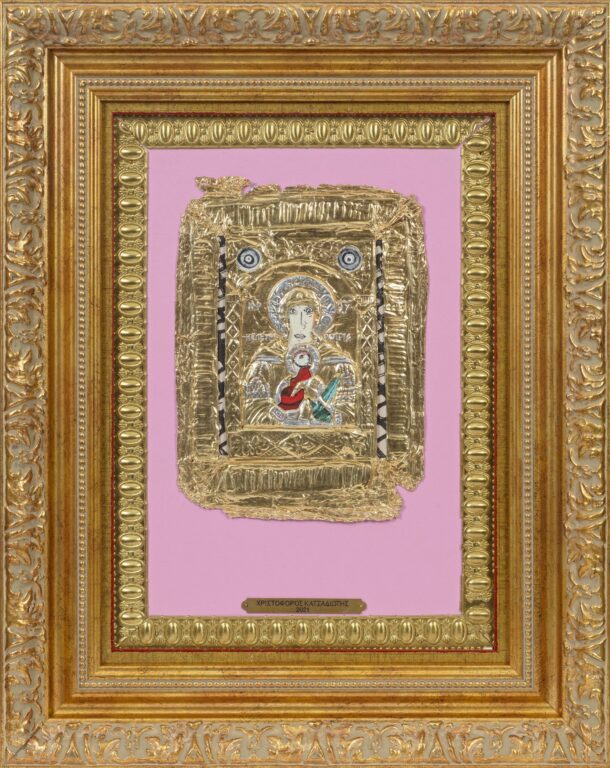
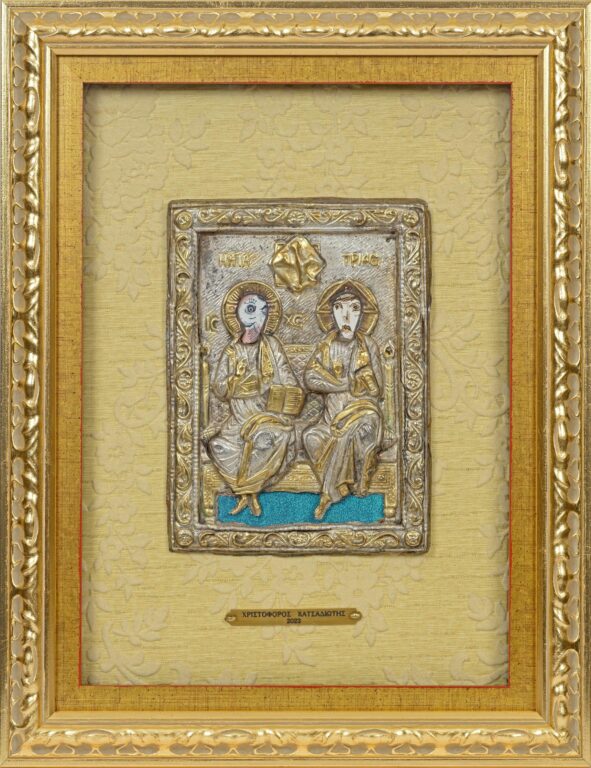
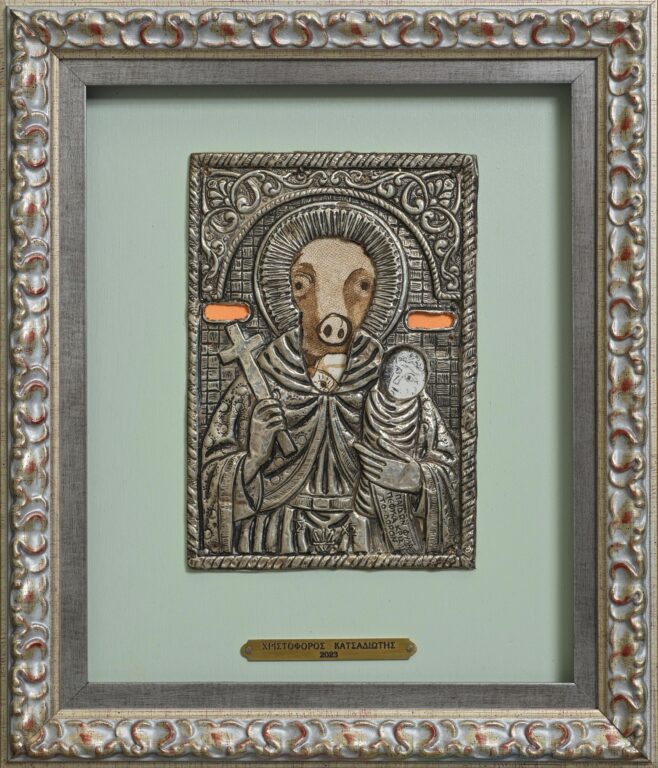
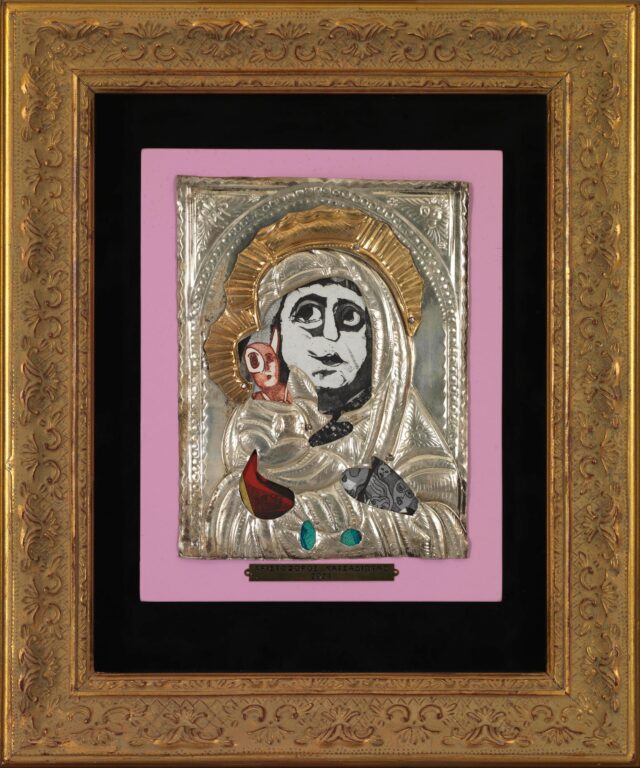
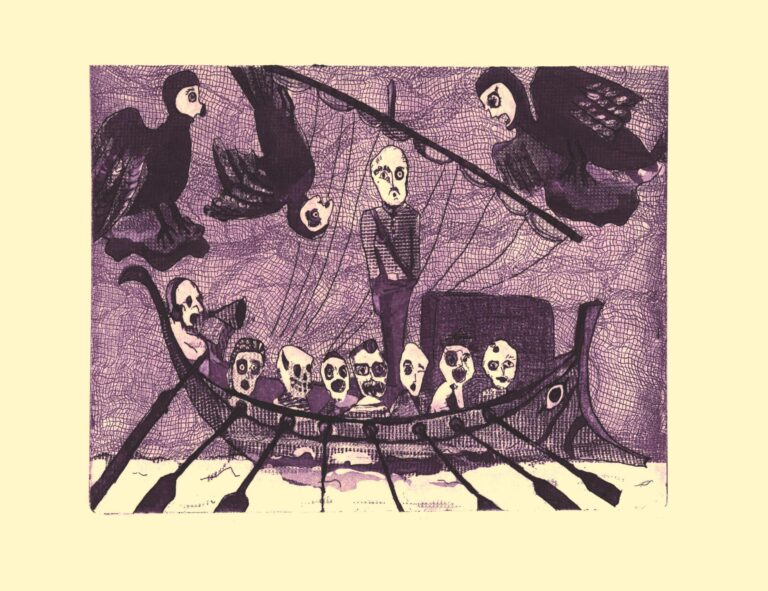
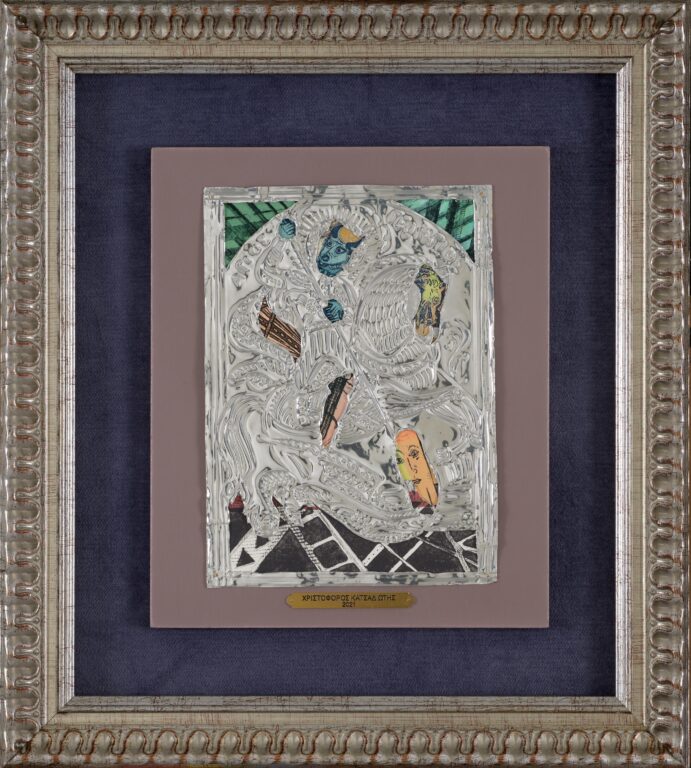
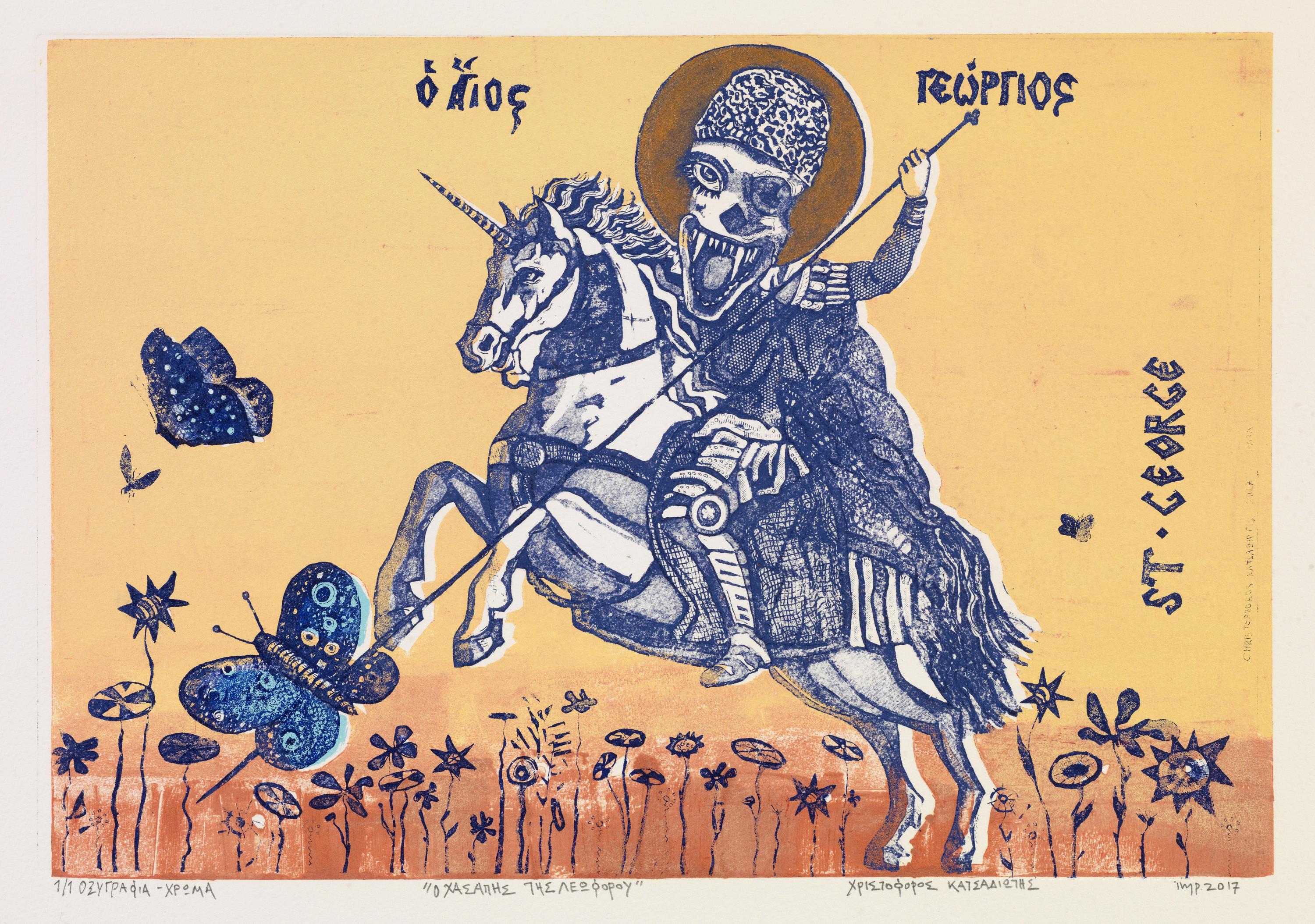
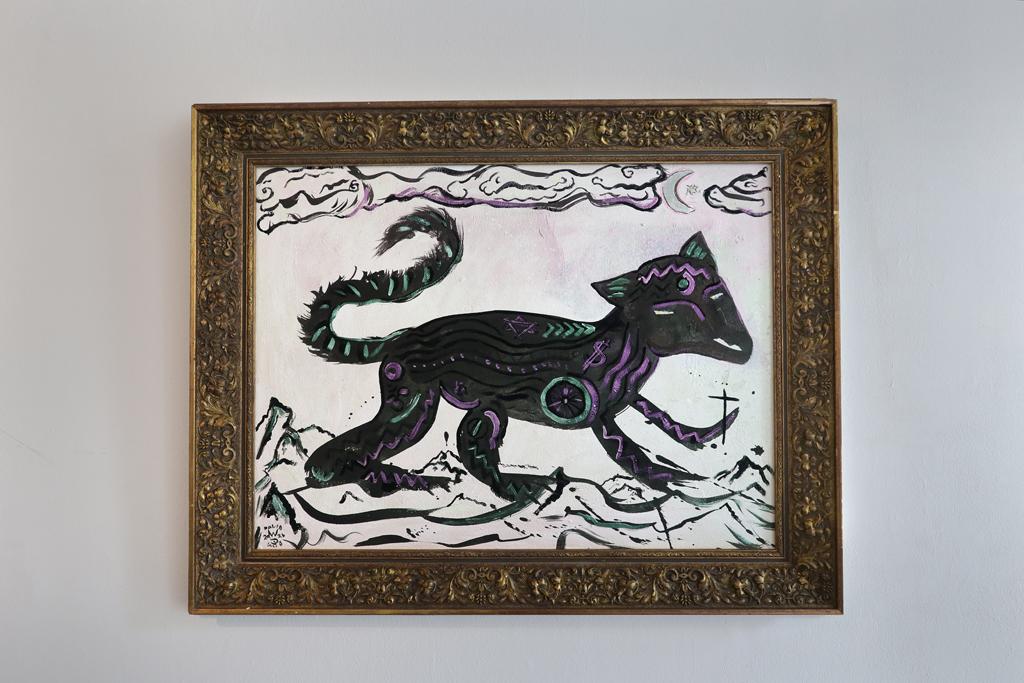
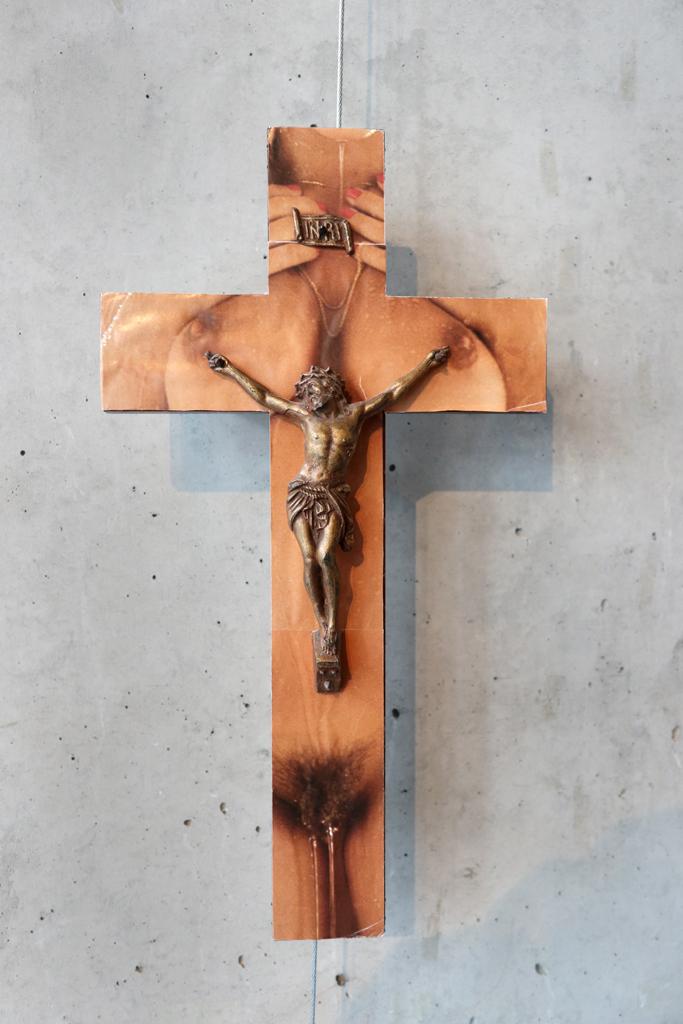
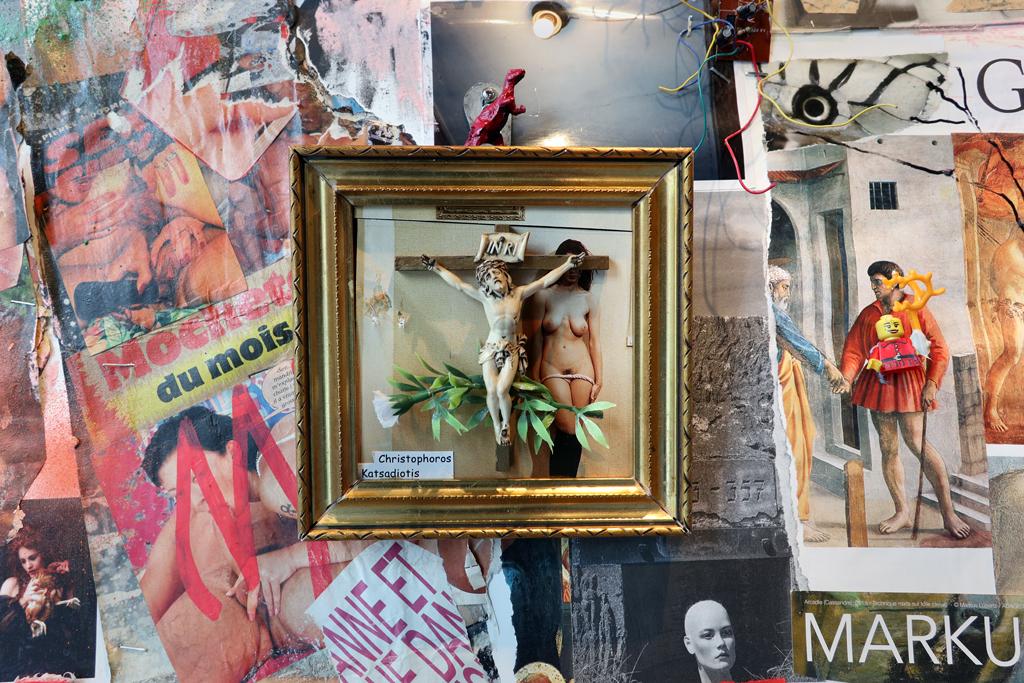
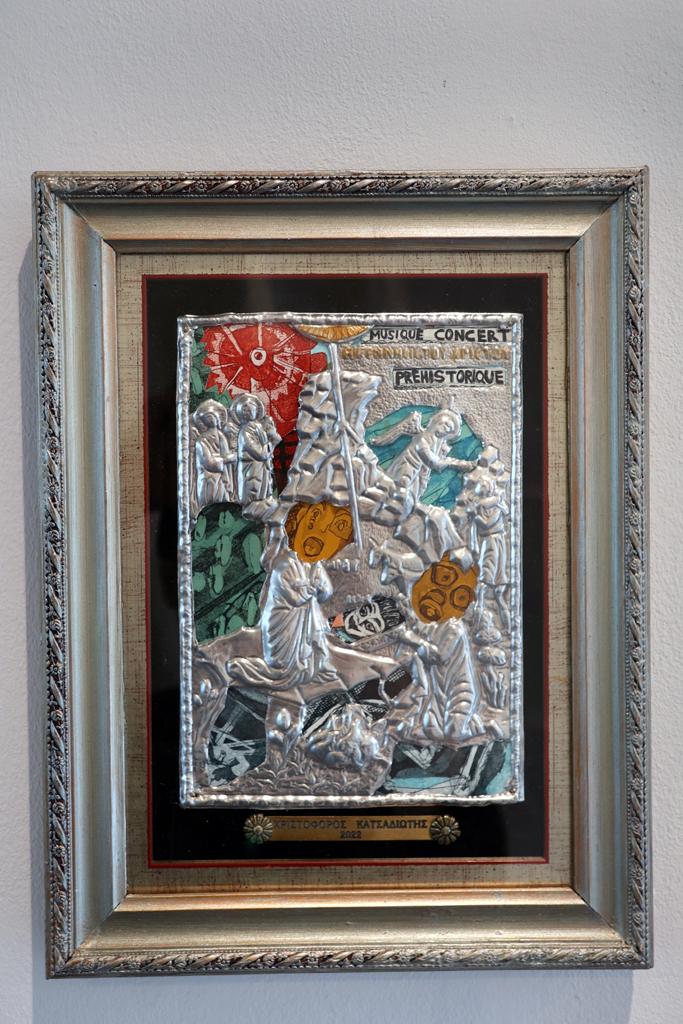
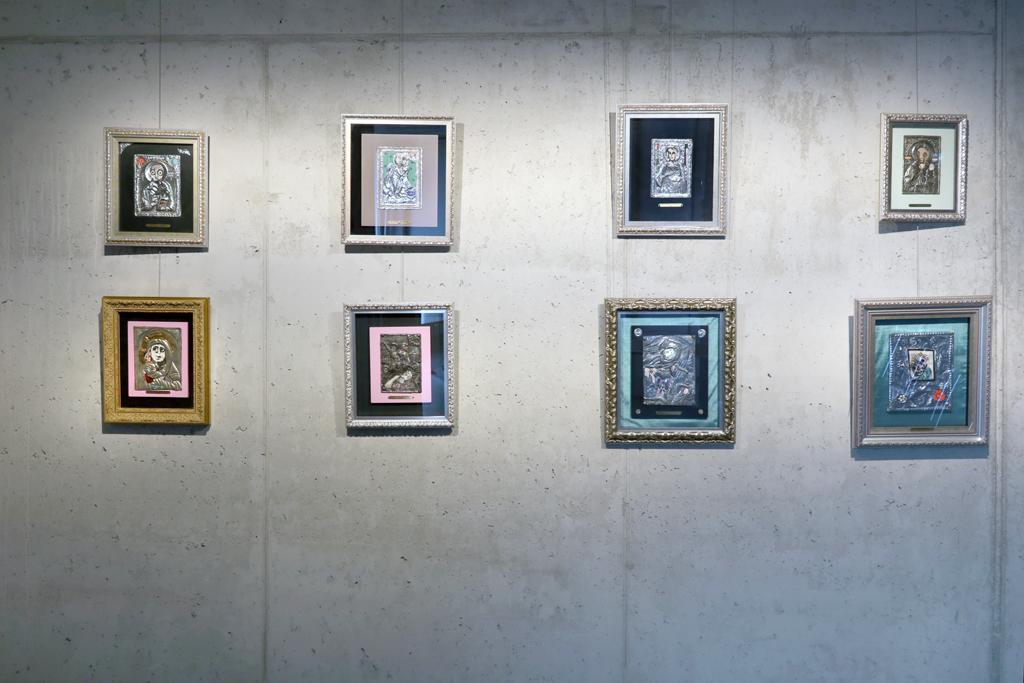
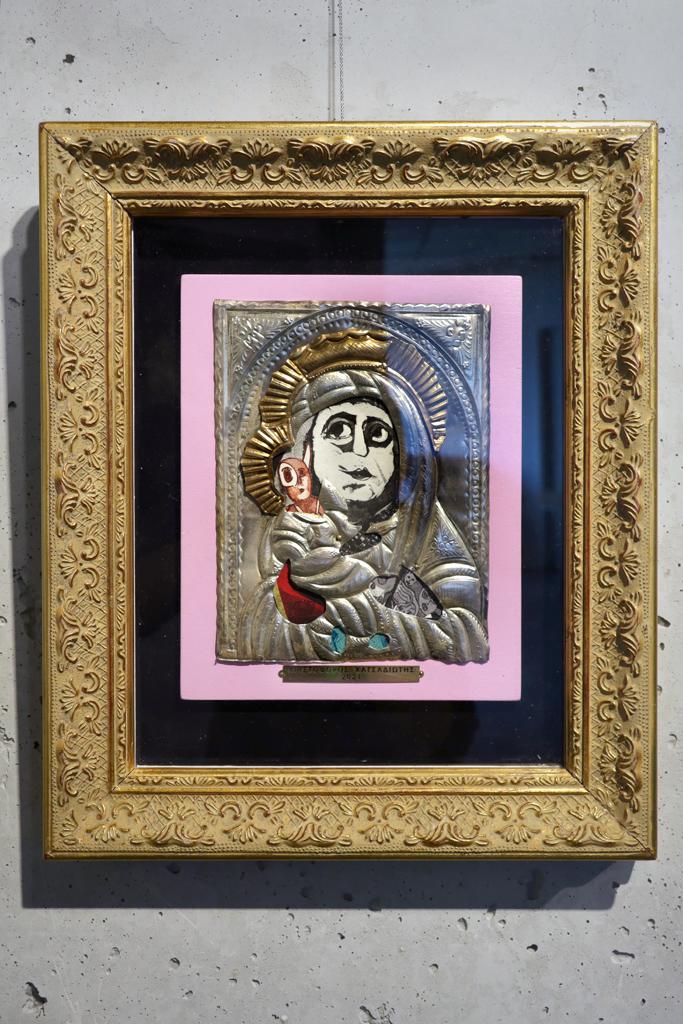
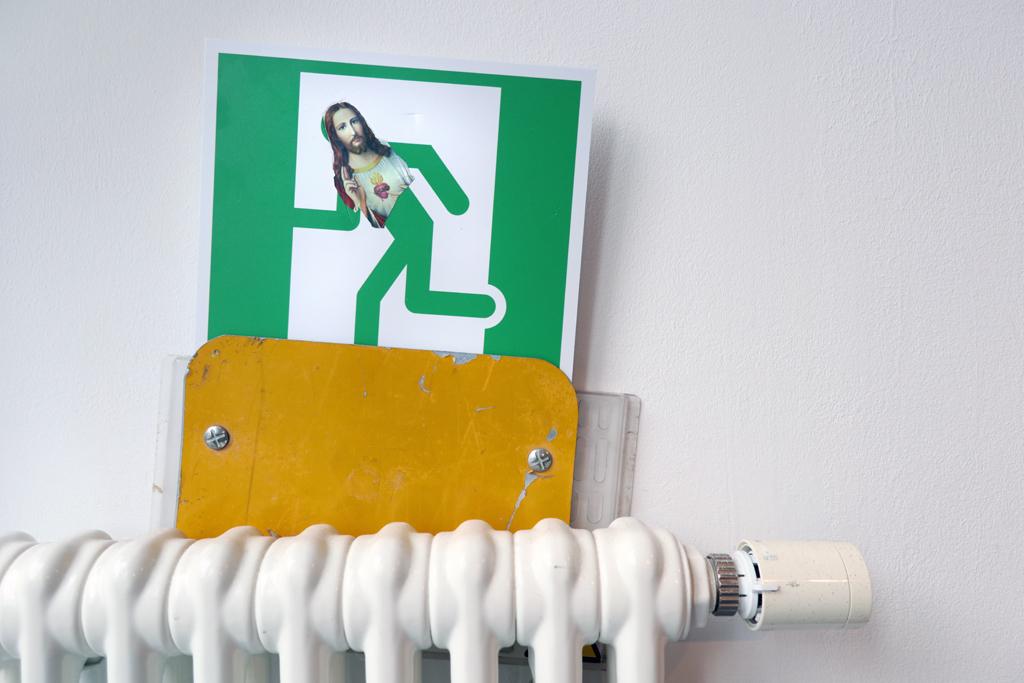
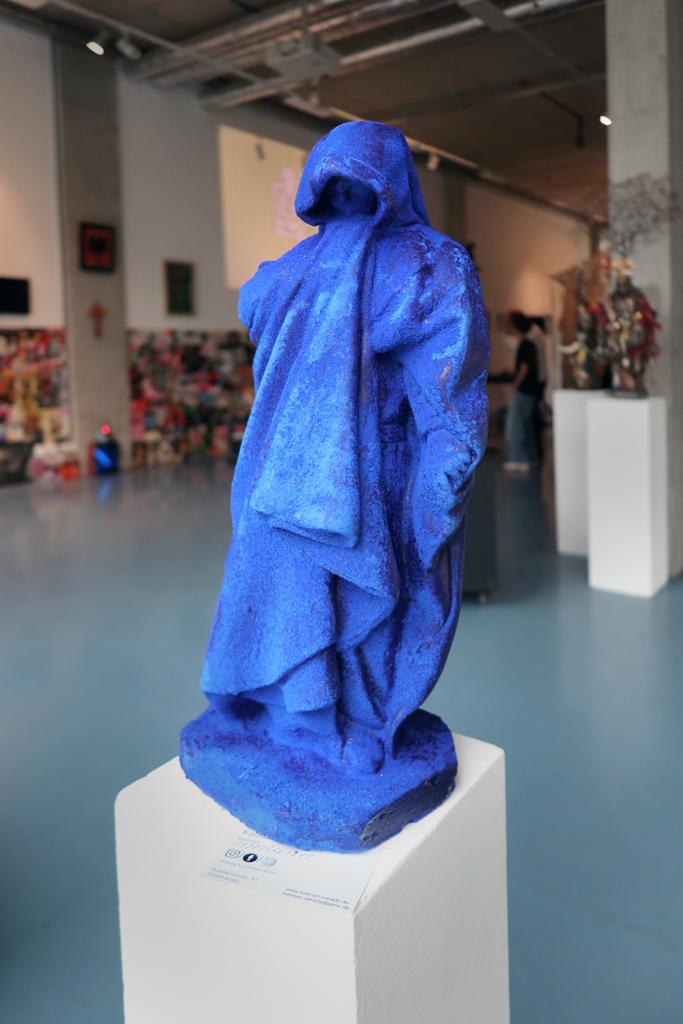
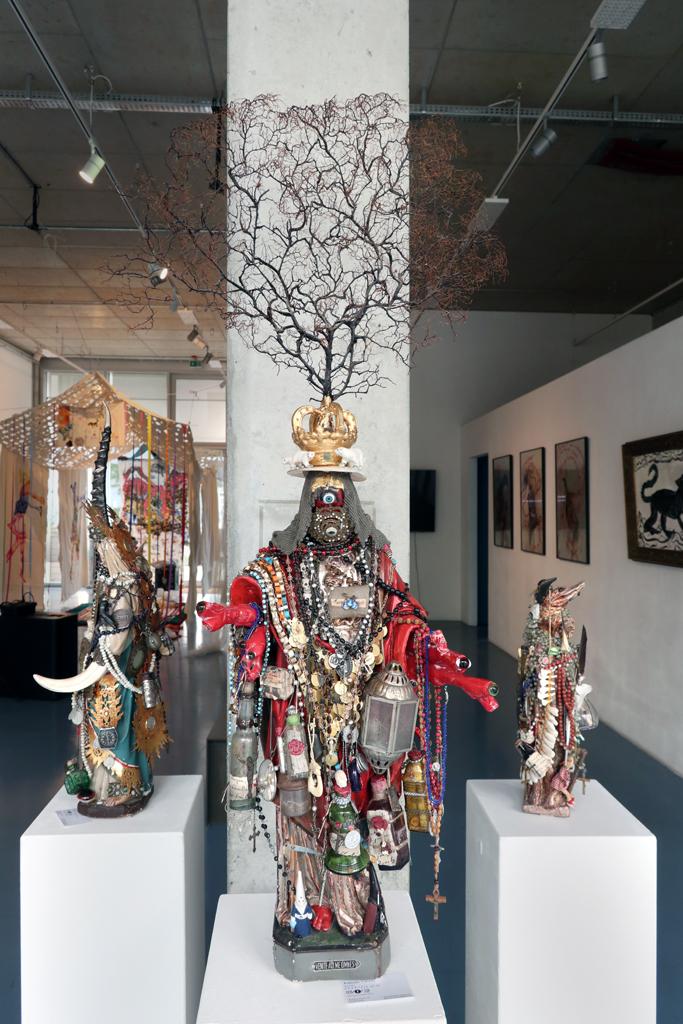
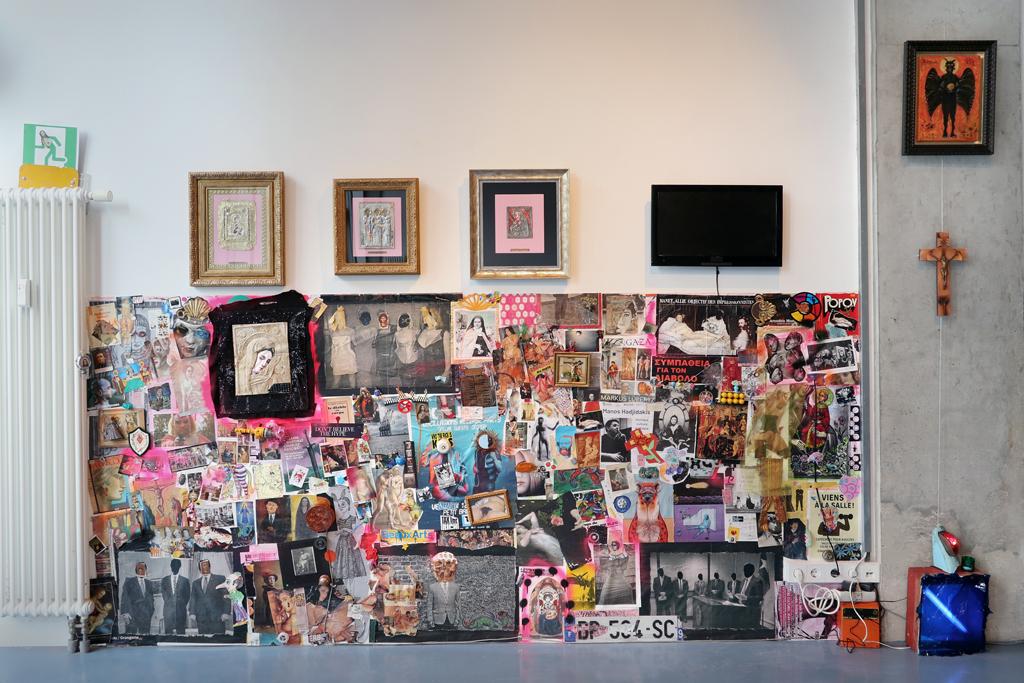
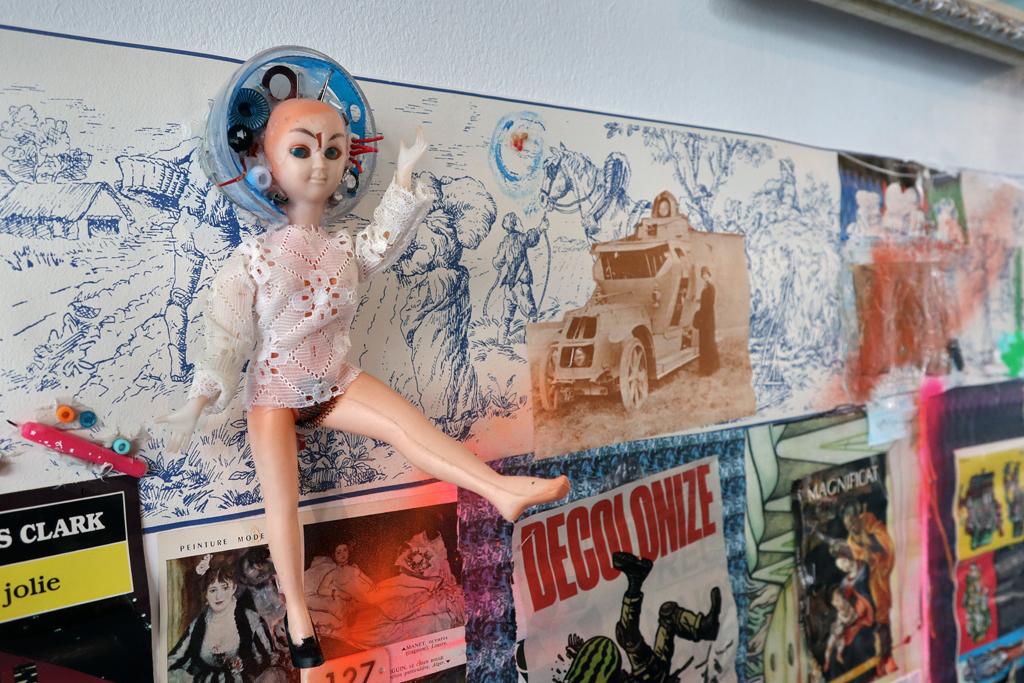
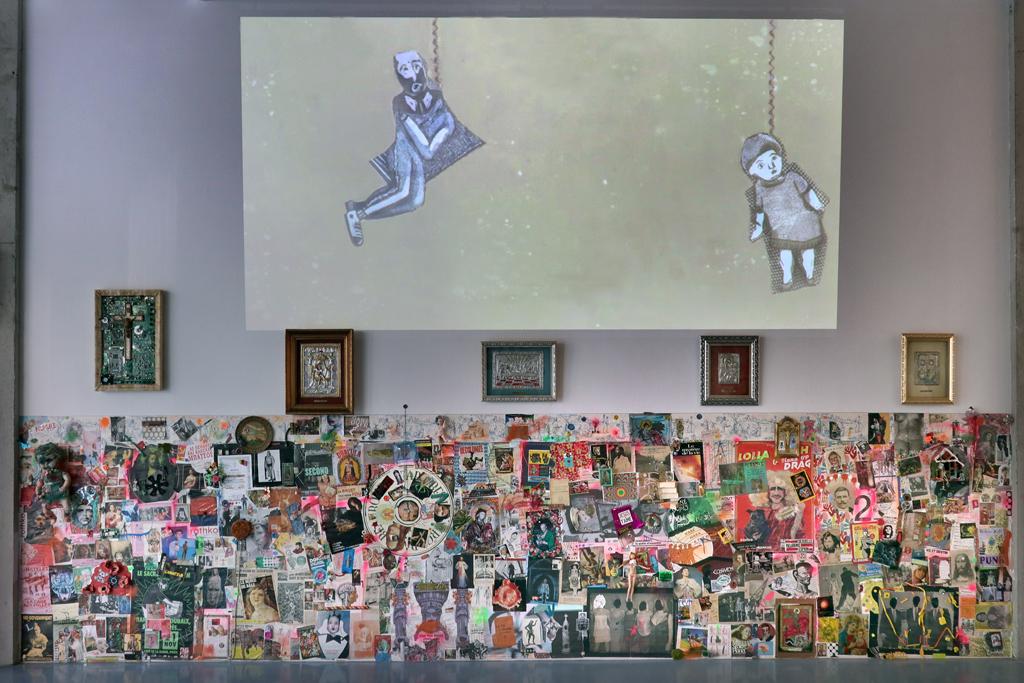
At the heart of the exhibition is a guest: the Greek artist Christophoros Katsadiotis and his print workshop. The exhibition space is intended to become a place and a kind of living organism of artistic production. Christophoros Katsadiotis uses found images and memories from which he creates new works through collage. Found objects and traditional images coalesce to form his own new world. From the synthesis of the old, something new emerges. Much like in the work of Kálmán Várady, who creates his so-called ‘Gypsy Warriors’ using found, mostly Christian figures, Christophoros Katsadiotis frequently reworks traditional Greek motifs alongside Orthodox Christian icons. The theme of religion therefore plays a special role in the exhibition. Historically, religious depictions in art were often dominant. The Church was the principal patron of artistic production. Christian and religious motifs shaped people’s visual world. The exhibition showcases the transformation of Christian motifs, or the shift in their meaning in the present day. Such images are often perceived as provocative, even though artists’ reinterpretations of classical Christian or religious motifs are generally respectful in nature, and are simply part of an intellectual metamorphosis and transformation of historical visual worlds.
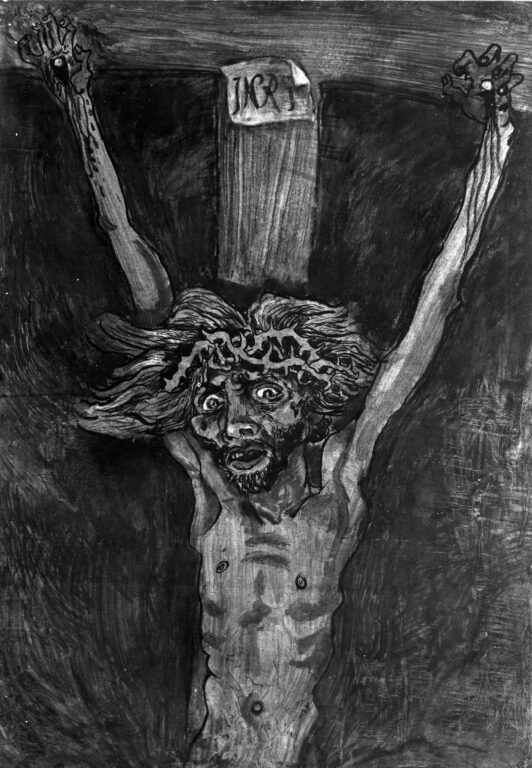
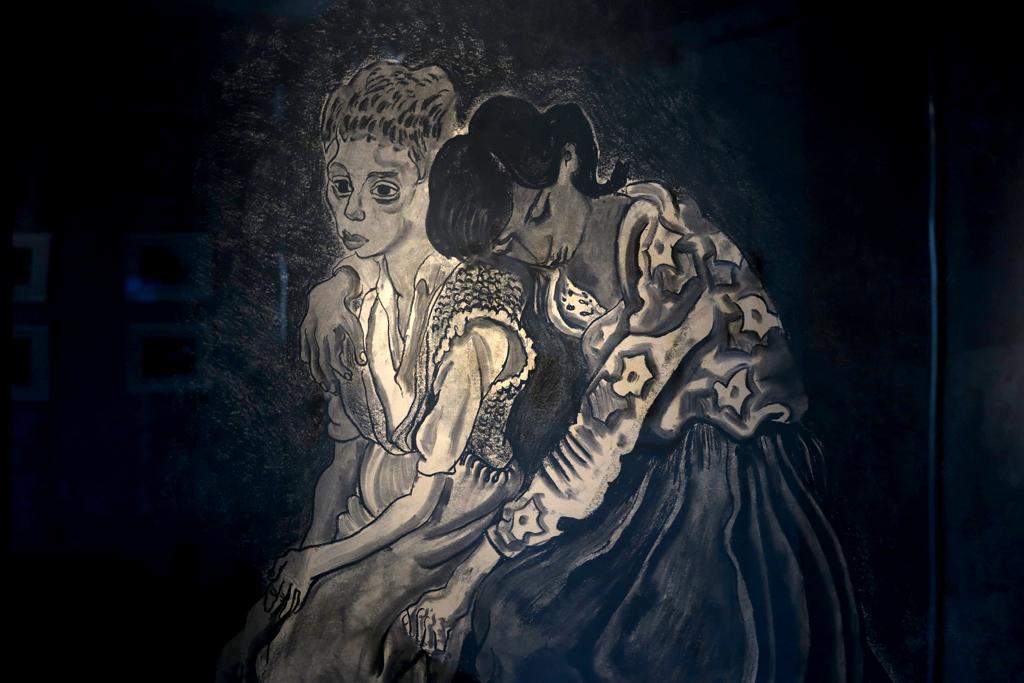
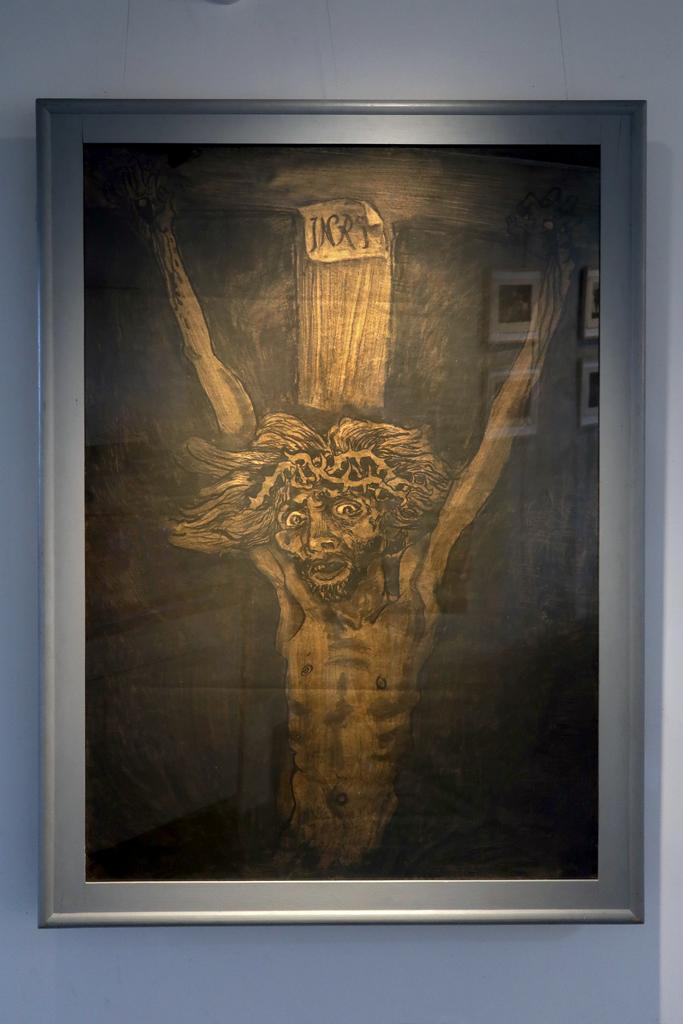
The exhibition features a work by the German artist Otto Pankok from his Passion cycle. The charcoal drawing “God, my God, why have you forsaken me?” depicts Karl Schwesig, a communist artist from Düsseldorf who was imprisoned and tortured by the Nazis at the start of their dictatorship. Pankok drew on the Christian motif to offer a political commentary on the contemporary context. The artist’s face was well known in Düsseldorf, so the picture became an unmistakable message. Otto Pankok used the Passion narrative as material to create a cycle during the Nazi era that ultimately called for resistance against totalitarian rule. The exhibition in the ‘The Passion’ series was banned by the Nazis, and the painting was only narrowly saved from confiscation. The dramatic experiences of the 21st century—genocide, war and displacement—have shaken many people’s faith in God. In a radio feature within the exhibition, Petra Rosenberg, a member of the Sinti community, speaks about the doubts and faith of her father, Otto Rosenberg, during his imprisonment in the concentration camps.
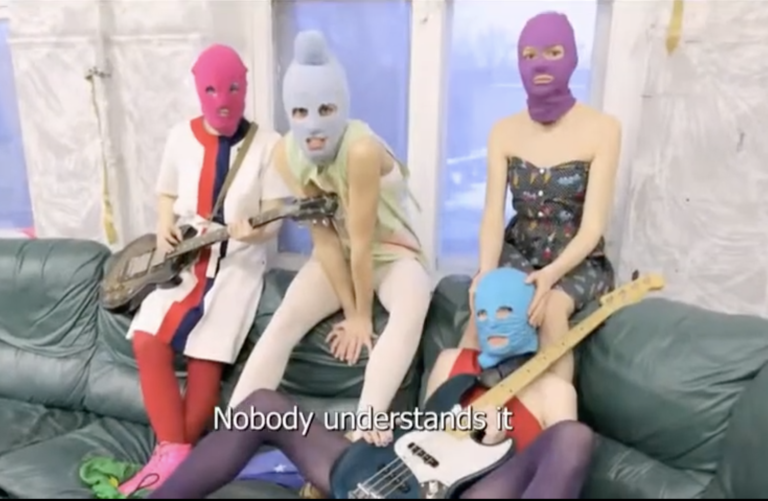
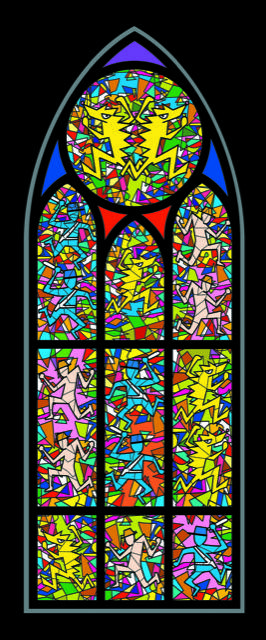
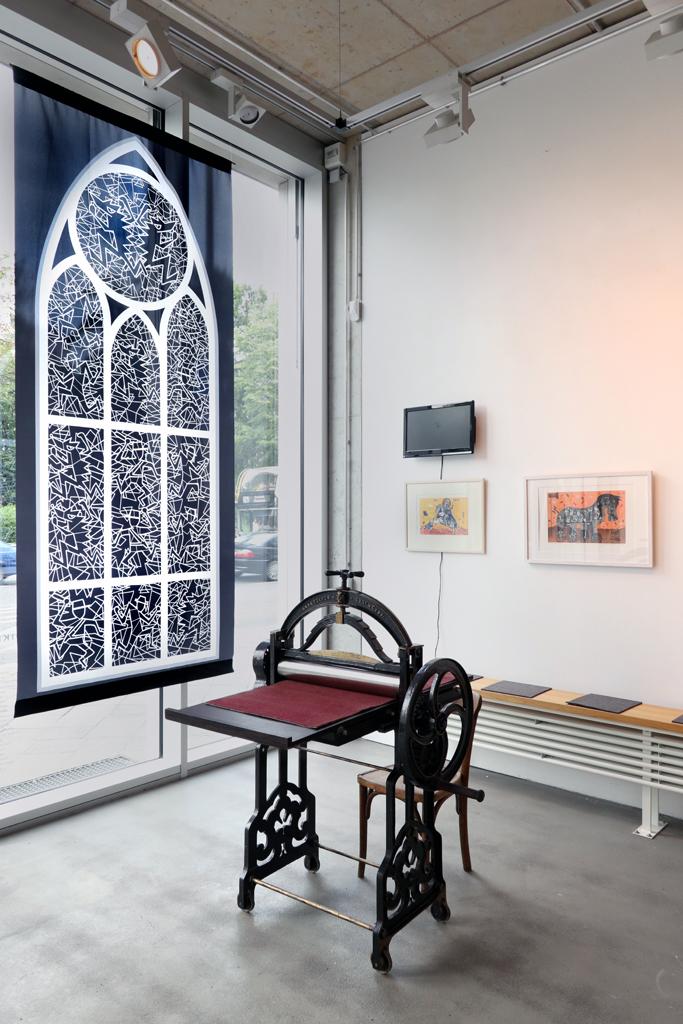
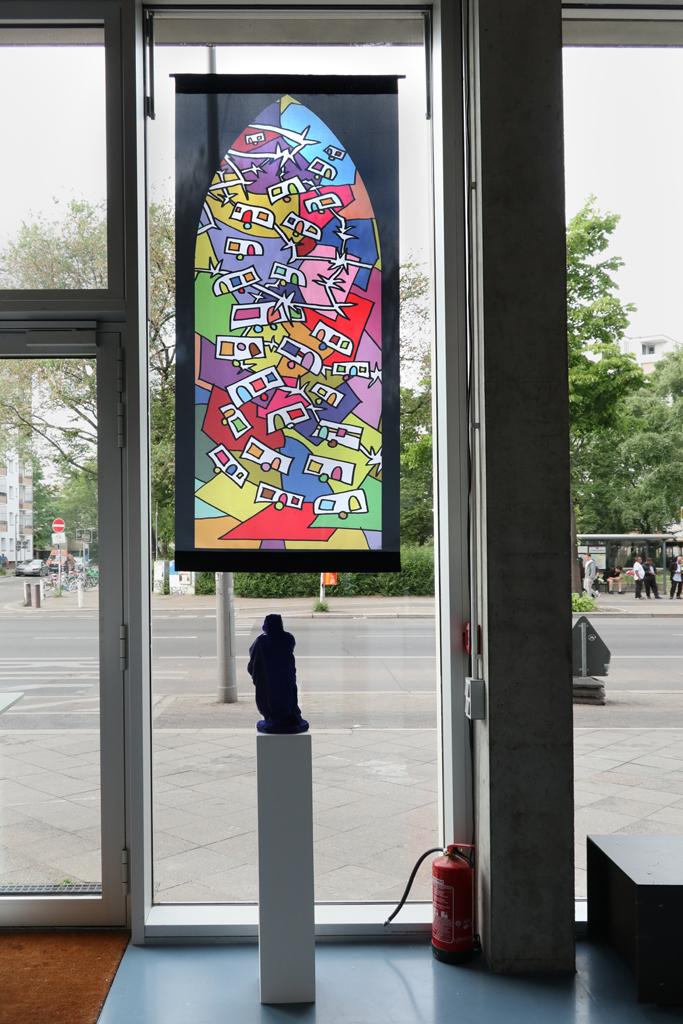
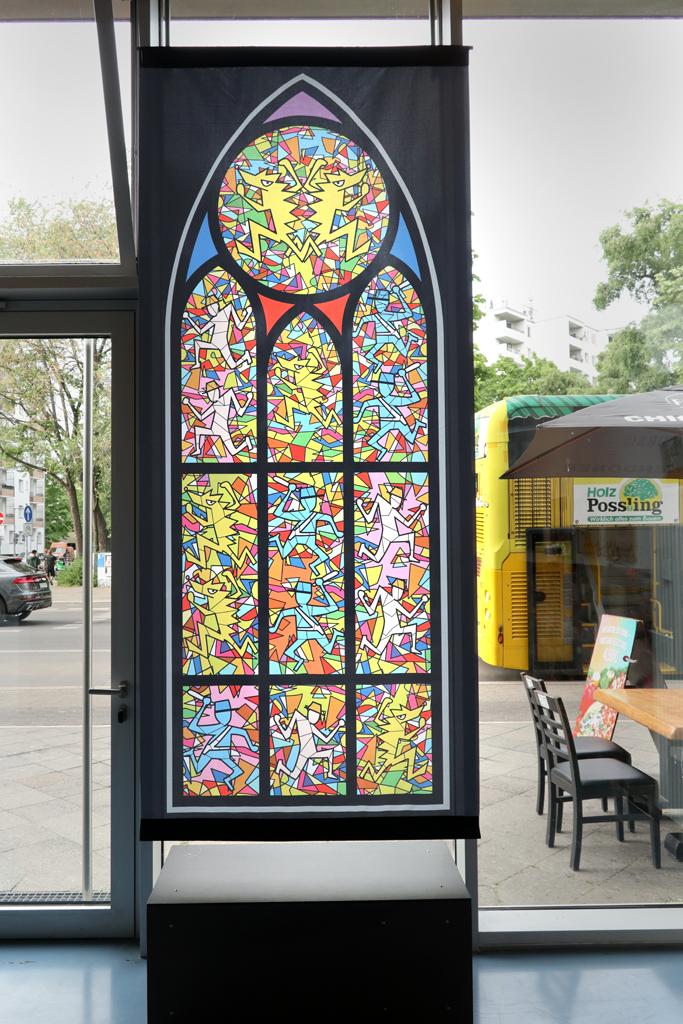
In his work “KT DRALE – Notre Dame des expulsions”, the French Romani artist Gabi Jiménez has created designs for church windows depicting the expulsions, marginalisation and persecution of Sinti and Roma. For, unfortunately, historically speaking, such persecution and marginalisation were often carried out in the name of religion, and the Sinti in Germany – most of whom were deeply religious – could not count on the solidarity of the Church. For example, the deportation of 35 Sinti children from the Catholic St. Josef Youth Home in Mulfingen in 1944 is well documented. The motif of St George, the dragon slayer, was (and in some cases still is today) used as a symbol of the fight against “unbelievers”. In Christophoros Katsadiotis’ work, however, St George does not slay a dragon, but acts as a butterfly catcher, with the butterfly symbolising metamorphosis, transience, but also magic and rebirth. Christophoros Katsadiotis’ icons caused a scandal at the National Museum in Athens in 2025: Nikos Papadopoulos, an MP for the far-right ‘Niki’ (Party of Victory) party, went on a rampage in the exhibition and tore some of his paintings to the ground. A broad political coalition ranging from conservative to left-wing politicians rallied to defend artistic freedom and criticised the act. These paintings are now also part of the exhibition ‘Metamorphosis of Thought’. The punk prayer performed by the Russian band Pussy Riot in Moscow’s Cathedral of Christ the Saviour on 21 February 2012, protesting against the alliance between the Russian Orthodox Church and the Putin regime, led to the band members being imprisoned for several years. In their published video, one can hear “Mother of God, Virgin, drive Putin away” and “The Patriarch believes in Putin, even though he should believe in God.” Maria Alyokhina has been included in the list of artists on behalf of the collective.
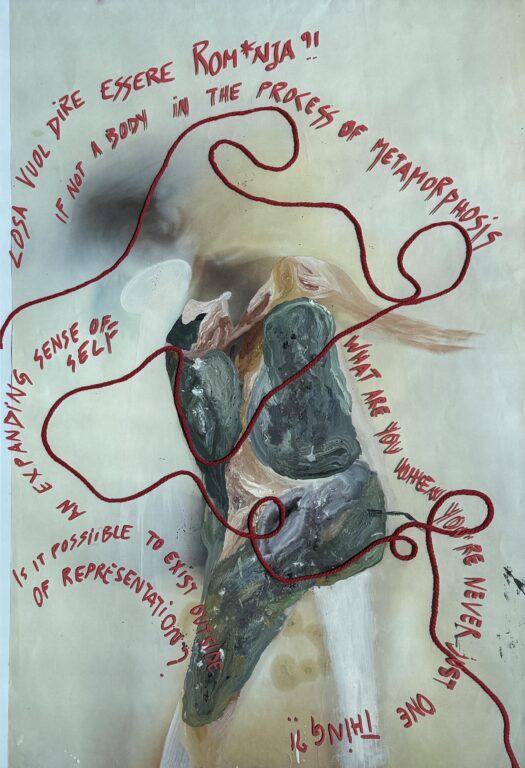
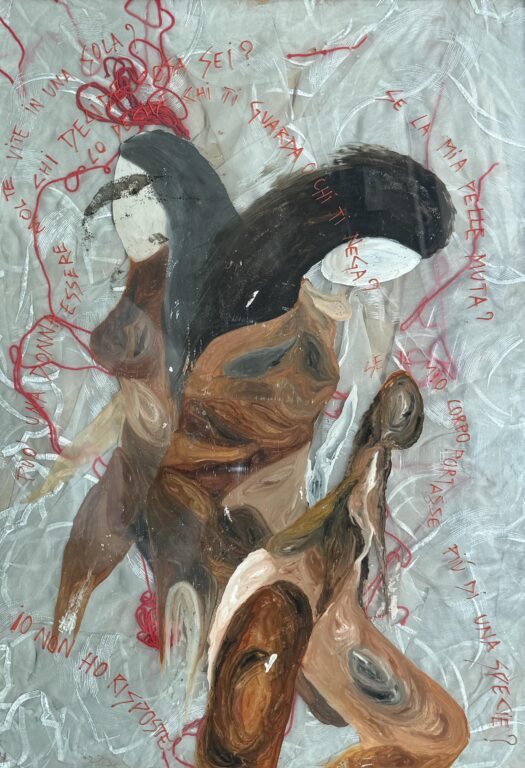
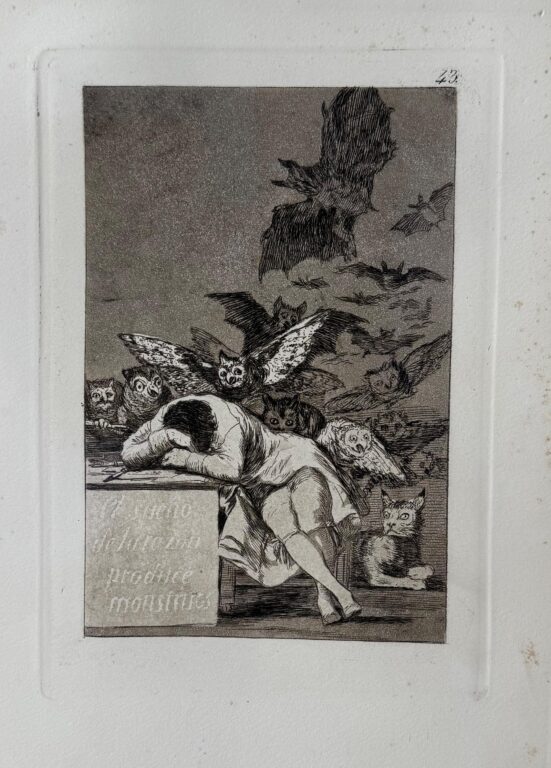
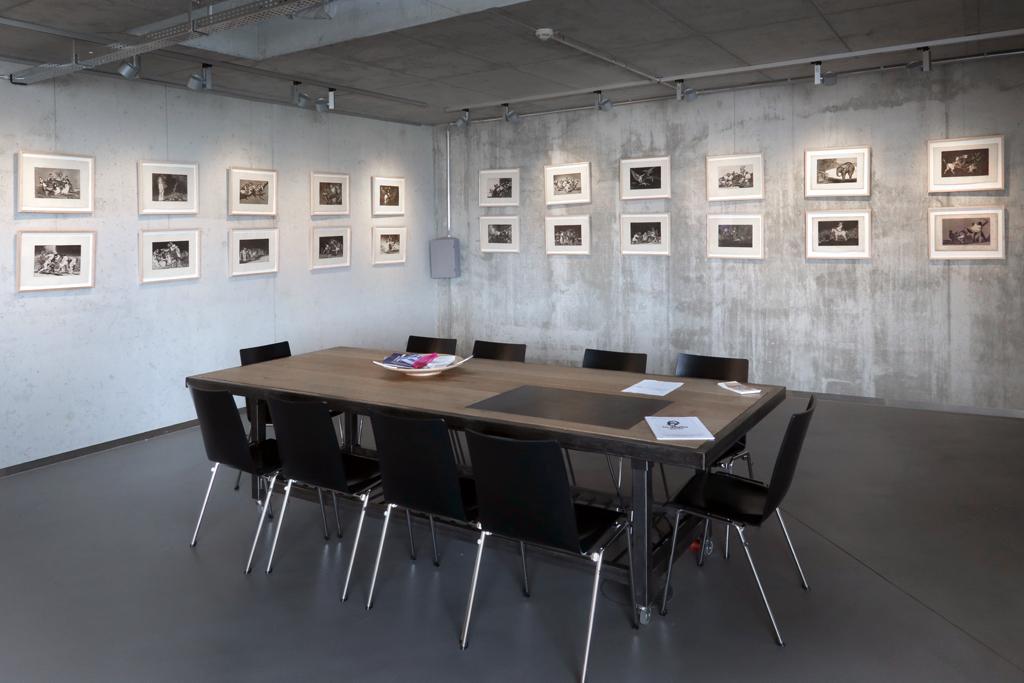
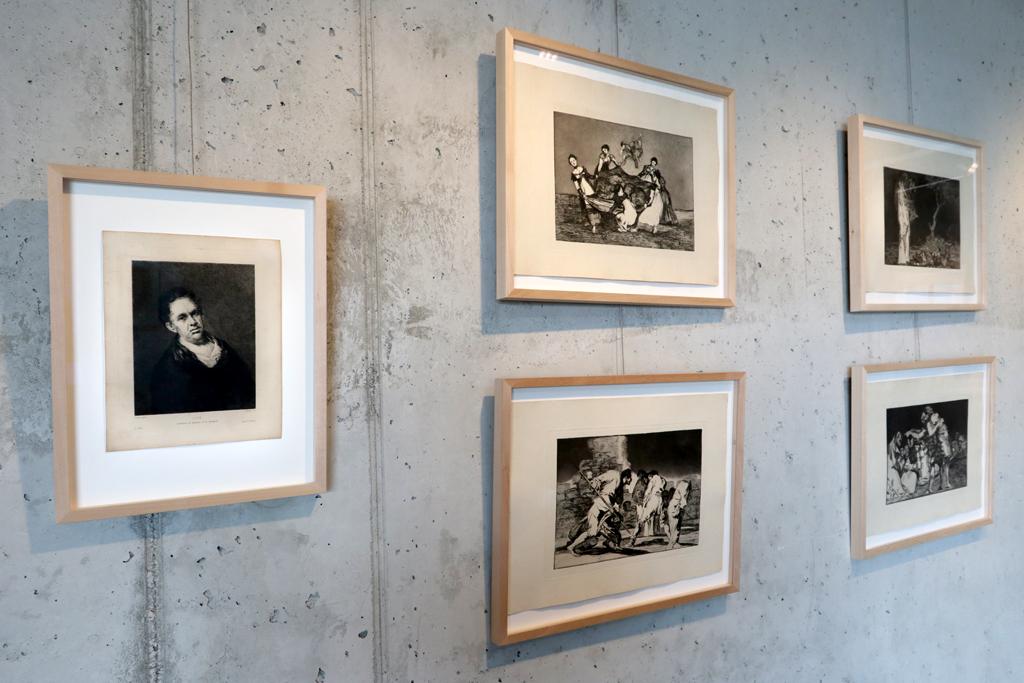
The Spanish artist Francisco de Goya, who was influenced by the French Enlightenment, is widely regarded as one of the founders of critical art, indeed as a forerunner of modernism as a whole. In particular, his caricature-like and surreal prints, beginning with the series Los Caprichos, held up a critical mirror to Spain’s entrenched absolutist society. The exhibition features his complete final series, “Disparates” (“The Absurdities”), which was ahead of its time in terms of artistic freedom. He never published four of the plates in Spain, but took them with him into exile in France, where they were only published posthumously in Paris in 1877. These works are also part of the exhibition. The surreal and bizarre imagery of Christoforos Katsadiotis is certainly reminiscent of Goya. Similarly, thematic and aesthetic affinities can be found with the artists Delaine Le Bas and Luna De Rosa, who, like Katsadiotis, often work with collages. Like Katsadiotis, Le Bas uses images from our everyday lives to reveal the uncanny. Children’s toys and dolls, often arranged in collage-like installations, evoke a sense of fear and alienation. On display is a work that is iconic for both the Kai Dikhas Collection and the Foundation’s work: the artist’s installation ‘Which Hunt’, which addresses the theme of witch hunts. Whilst Delaine Le Bas and her husband and artistic partner Damian Le Bas have been central, influential artists within the group since Kai Dikhas’ inception, there are now younger artists such as Luna De Rosa who, like Le Bas, also utilise the methodology of collage in textile art and performance to expose systems of oppression in their work. The two artists belong to different generations, yet have created a similar artistic universe that uses art to expose the fear and oppression of hegemonic systems and calls for change.
The famous painting by Theodore Géricault, „The Fleet of Medusa“ is an iconic art work of French art history and it also is an early example of political art. The painter has been obsessed with depicting a tragic incidence of French colonial history when a ship stranded on a well known sand bank. The blame lay with the captain, who had served under Louis XVI and had not commanded a ship since the Revolution. The Minister of the Navy had dismissed hundreds of Napoleonic officers and replaced them with aristocratic veterans of the Ancien Régime. France was deeply divided between radical royalists on the one hand and Bonapartists and liberals on the other. The reports by the ship’s doctor Savigny and the engineer Alexandre Corréard became bestsellers, and the shipwreck of the Méduse became a symbol of the evils of the Restoration. It led to the fall of the Minister of the Navy and the mass dismissal of his protégés. Not only did this painting publish the outrageous incident once more, but also the central hero of Géricault’s painting is a black man who sees rescue for the desperate shipwrecked people.
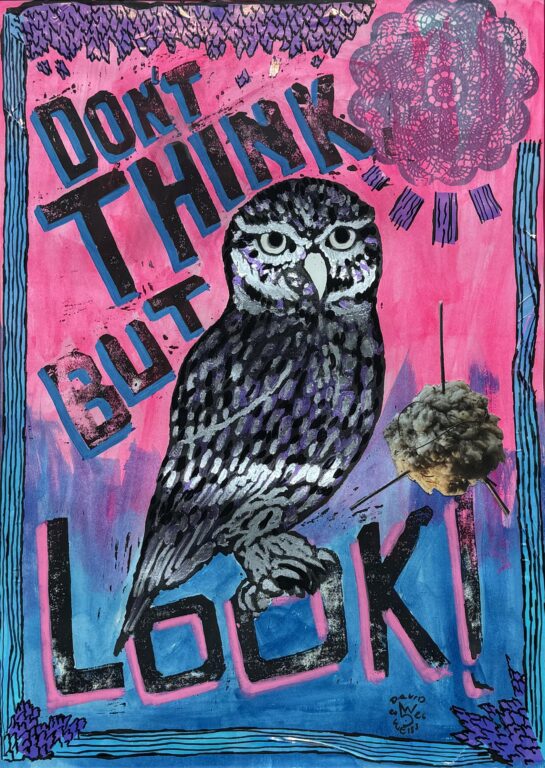
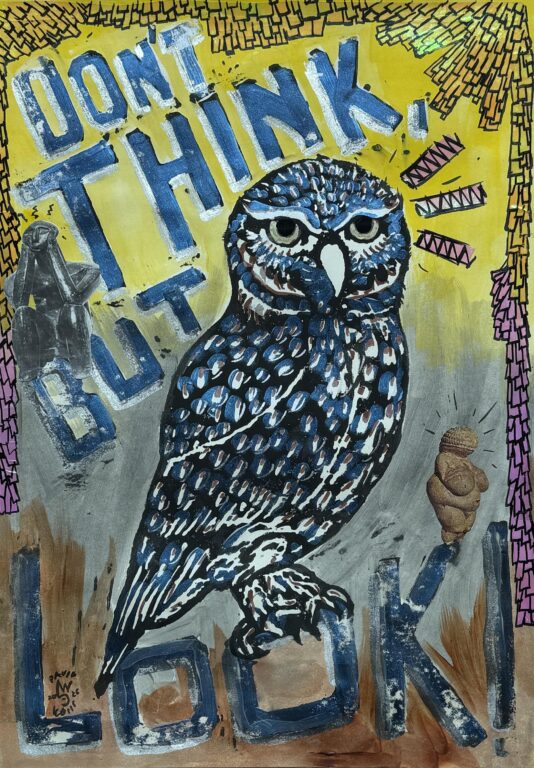
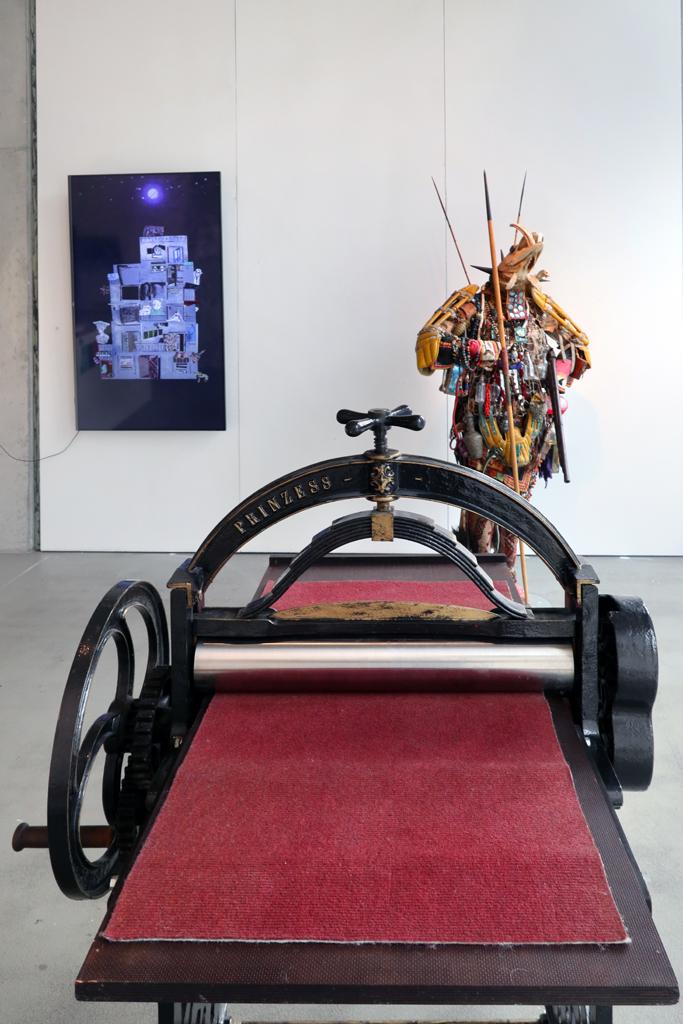
The Brazilian artist Brunn Morais is as much an artist as he is a scholar. In his work The Window of Love, he explores the story of the Portuguese nun and abbess Maria do Alcoforado. Having become famous for the poetry of her love letters, written in French, not only did her love fail, but as a woman she was even denied authorship by the public of the time due to the quality of the language in the letters. She eventually became abbess of her convent. David Weiss advocates pure vision as a form of thought. Alongside woodcuts, the Gypsy-Dadaist presents a comet made of scrap metal, which will traverse the gallery space in a performative manner as a beacon of a new era.
Overcoming racism and exclusion is a goal and a driving force behind the movement of artists who belong to the Sinti and Roma minority. Their images confront the stereotypes about minorities that prevail in society with a vibrant self-image. They actively contribute to a metamorphosis of thinking. The artists construct a new form of open society, enabling us to live together in a respectful and open manner, curious about one another. In the spirit of the Enlightenment, this movement is one of self-empowerment for the artists.
At the very beginning of the exhibition, a printing press stands in the middle of the art as a tool for artistic work, reproduction and multiplication. For 15 years, Kai Dikhas, which roughly translates as ‘the place of seeing’ in Romani, has been a meeting place for artists and their audience. It is a place of freedom for art, but also for creation, work and multiplication, because there is much to do.
Curator: Moritz Pankok
Opening: 30 May 2026 – 7.00 pm
Exhibition: 31 May 2026 – 31 October 2026
Admission: free
Venue: Kai Dikhas Foundation & Dikhas Dur Art Space, Aufbau Haus am Moritzplatz, Prinzenstr. 84.2, 10969 Berlin
Opening hours: Thu to Sat, 4 pm – 7 pm